Skip to content

More than Silk on the Silk Roads: Sogdians and Cultural Exchange Across Eurasia

Discussion of teaching the Silk Roads

Bram Hubbell
Bram Hubbell
3 min read
More than Silk on the Silk Roads: Sogdians and Cultural Exchange Across Eurasia
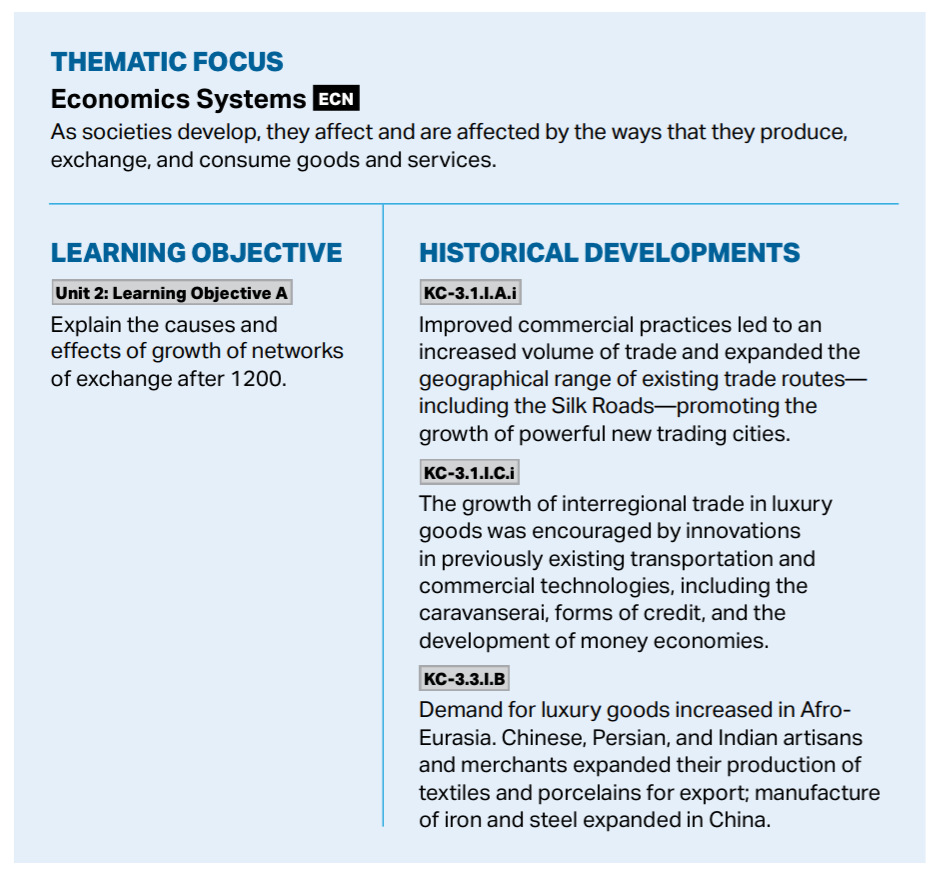
From page 54 of the AP World History Course and Exam Description.

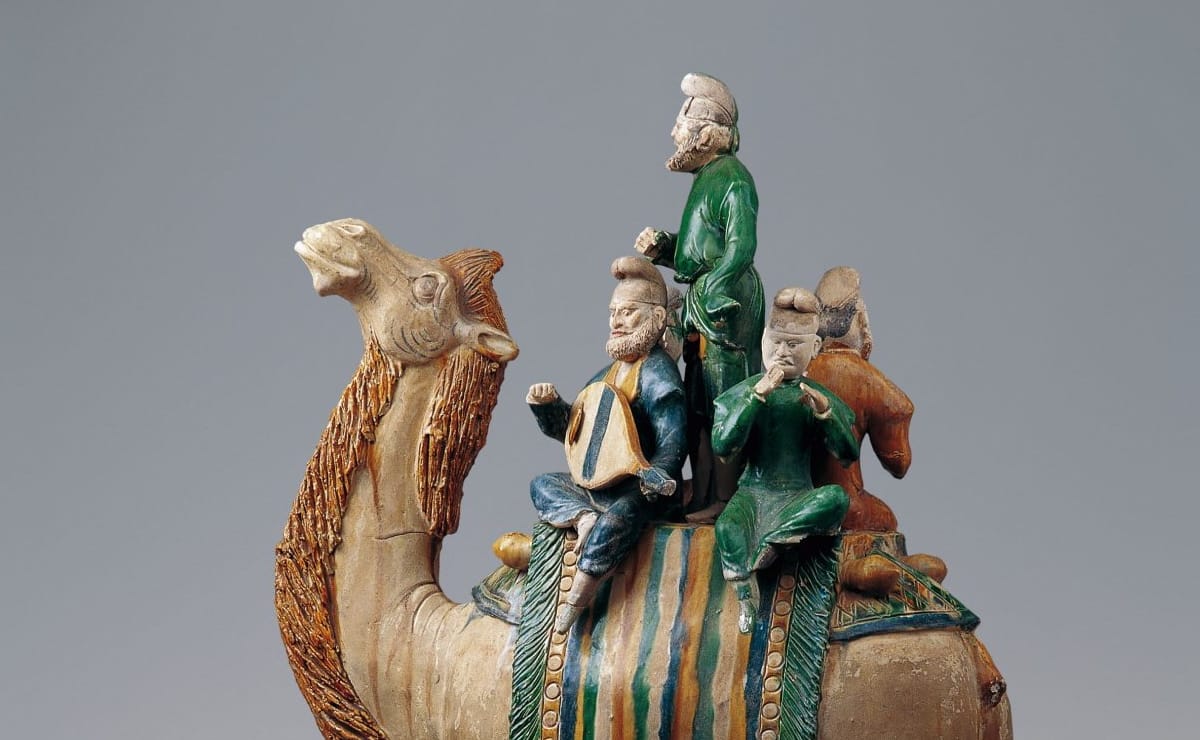
Too often, teaching the Silk Roads means focusing on how goods moved between societies at either end of the Silk Roads. While understanding how Chinese silk reached the Mediterranean is important, I often think that the focus on the edges of Eurasia, while overlooking the societies in Central Asia, is similar to the tendency of coastal Americans to refer to the middle of the country as ‘flyover states’. We know people live in the middle of these landmasses, but we focus more on the coastal edges. Ask yourself when was the last time you focused on the critical role of the Sogdians in facilitating trade across Eurasia?

Source: Our Art Corner.

The Sources


Related Posts

Members Public

“These People Have the Cream of the Trade”: Gujaratis’ Continued Influence after the Arrival of Europeans

The Portuguese acknowledged the continued dominance of Gujarati traders

“These People Have the Cream of the Trade”: Gujaratis’ Continued Influence after the Arrival of Europeans
Members Public

“We Decreed by Law”: Regulating the Slave Trade in Sixteenth-Century Kongo

Teaching how the rulers of Kongo regulated the slave trade

“We Decreed by Law”: Regulating the Slave Trade in Sixteenth-Century Kongo
Members Public

“Set this Chessboard and its Pieces Before Your Most Learned Men”: Teaching Chess and the Games of World History

Teaching Afroeurasian exchange using chess

“Set this Chessboard and its Pieces Before Your Most Learned Men”: Teaching Chess and the Games of World History