Skip to content

“Sales, Auctions, and Exchanges Go on Constantly”: The Song Chinese Economy

A discussion of the Song Chinese economy.

Bram Hubbell
Bram Hubbell
3 min read
“Sales, Auctions, and Exchanges Go on Constantly”: The Song Chinese Economy
From page 39 of the AP World History Course and Exam Description

The Source

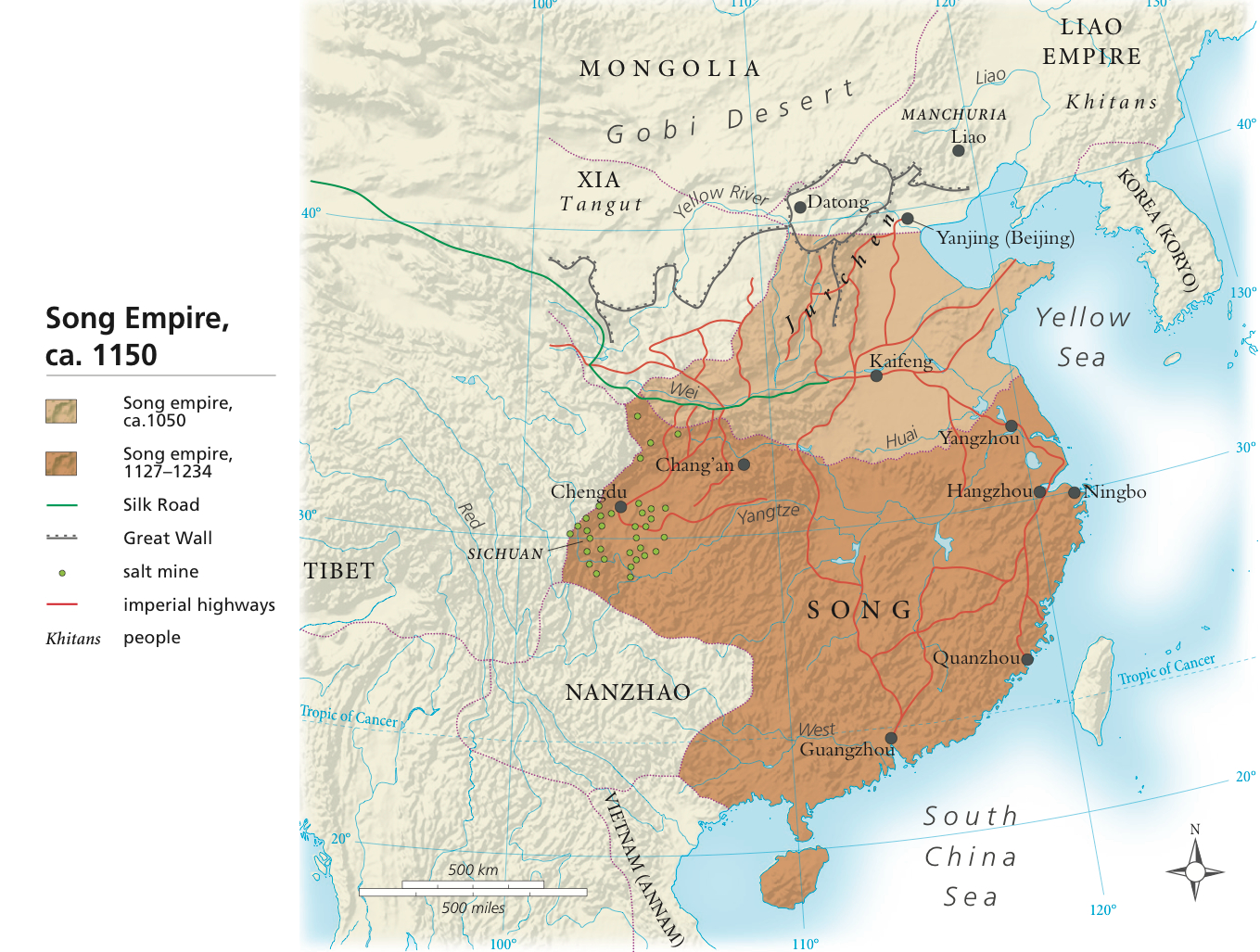
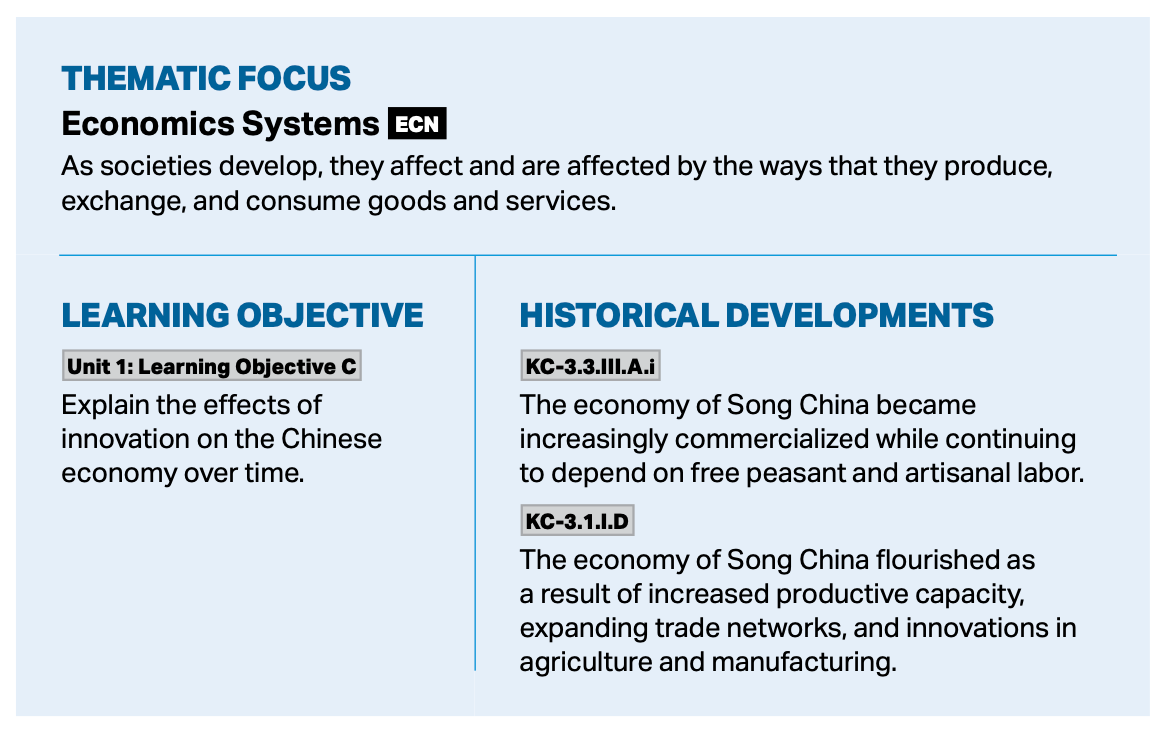
Teaching economic concepts in history courses can sometimes be challenging. Lists of trade items are not always exciting for students. And if one is teaching AP World History, we want to get students excited about the material at the start of the year. The first topic in Unit 1 asks students to understand how Song China’s economy was “commercialized” and why it “flourished.” I can think of topics that might be more fun for teenagers.


Related Posts

Members Public

“We Decreed by Law”: Regulating the Slave Trade in Sixteenth-Century Kongo

Teaching how the rulers of Kongo regulated the slave trade

“We Decreed by Law”: Regulating the Slave Trade in Sixteenth-Century Kongo
Members Public

“Set this Chessboard and its Pieces Before Your Most Learned Men”: Teaching Chess and the Games of World History

Teaching Afroeurasian exchange using chess

“Set this Chessboard and its Pieces Before Your Most Learned Men”: Teaching Chess and the Games of World History
Members Public

“Walk by the Ancient Customs of the Port”: Limits on English Trade in India in the 1600s

In the 1600s, the English EIC adapted more than conquered

“Walk by the Ancient Customs of the Port”: Limits on English Trade in India in the 1600s