“A Situation of Complete Inertia and a Widespread Apathy”: Teaching Everyday Resistance to French Imperialism in Senegal in the 1920s and 1930s
What were the weapons of the weak in French Senegal?

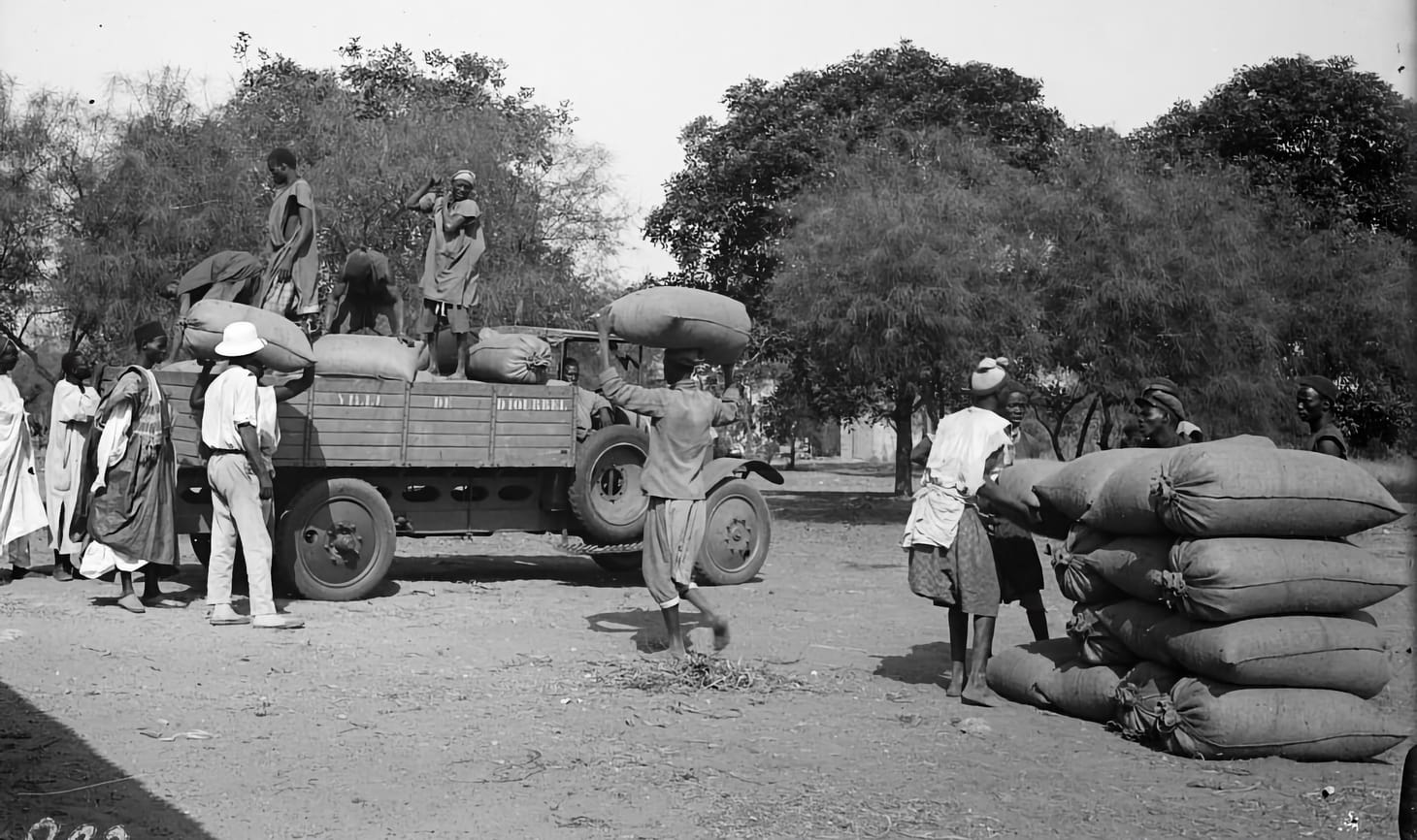
The picture above shows Senegalese men loading sacks of peanuts onto a truck. European imperialism in Africa and Asia heavily depended on indigenous labor, especially with the production and transport of commodities. In 1944, André Latrille, the Governor of French Ivory Coast, described this dependency:
The labor problem must be the mainstay of our colonial policy. It is not only at the heart of our political economy, it is also a crucial issue on which the efficiency of our Empire might be evaluated.
European officials regularly complained that indigenous laborers didn’t work hard enough or were “lazy,” but were they? In his 1985 classic, Weapons of the Weak: Everyday Forms of Peasant Resistance. We can use this concept to help students see how many Senegalese resisted French rule in the 1920s and 1930s.
The Sources
In 1927, an unidentified French official submitted a briefing as part of an annual policy report. He explained the challenges that colonial officials regularly encountered with indigenous laborers forced to build roads:
This Content is for Subscribers on the Buy Me Lunch and Buy Me Dinner tiers
SubscribeAlready have an account? Log in