“A Very Pleasant Game”: Teaching the South Asian Cultural Mosaic with Snakes & Ladders
Teaching the diversity of South Asia through Snakes and Ladders

I’m often asked what my favorite place to visit is and why. Without hesitation, I answer India and South Asia in general. I love the region’s diversity. When I travel in the region, it’s impossible not to see how different ethnic groups and religious traditions have contributed to the region’s rich culture and history. A few people have expressed surprise when I talk about the region’s diversity. Many people imagine India as a Hindu country. The current political leaders, who are members of theBharatiya Janata Party (BJP), emphasize that India is a Hindu country. They claim that outsiders temporarily invaded and imposed their views on Hindus, but they imagine India still has a pure Hindu essence. Nationalism is a powerful ideology that can often obscure more complicated histories. As world historians, we know that India’s history is full of examples of cross-cultural encounters, but conveying them in a fun and easy way can be difficult.
An excellent example of a more inclusive approach to Indian history is Audrey Truschke’s new India: 5,000 Years of History on the Subcontinent. Instead of presenting a traditional top-down political narrative, Truschke emphasizes a more bottom-up approach to South Asia’s diverse history:
South Asian history is lengthy and diverse, but that diversity itself provides a kind of glue that holds together a wide-ranging set of narratives. Across time and regions, South Asians engaged in robust cross-cultural exchanges between groups on the subcontinent and with migrants. They forged connections via trade and travel with people living in other parts of Asia and, in more recent centuries, the rest of the world. Partly owing to their ever-changing contexts and contacts, South Asians repeatedly innovated in the religious and political spheres, making adaptation and change recurrent, even consistent, parts of their lived experiences. Throughout this book, I return to these persistent threads of diversity, cross-cultural exchanges, and innovation, since they offer anchors to ground us within South Asia’s mosaic of history.
Truschke’s narrative reflects what I enjoy about South Asia. I see the legacies of these cross-cultural exchanges everywhere I travel in the region. Instead of being a pure Hindu country, Indian history is marked by “centuries in which religious identities were more fluid.”
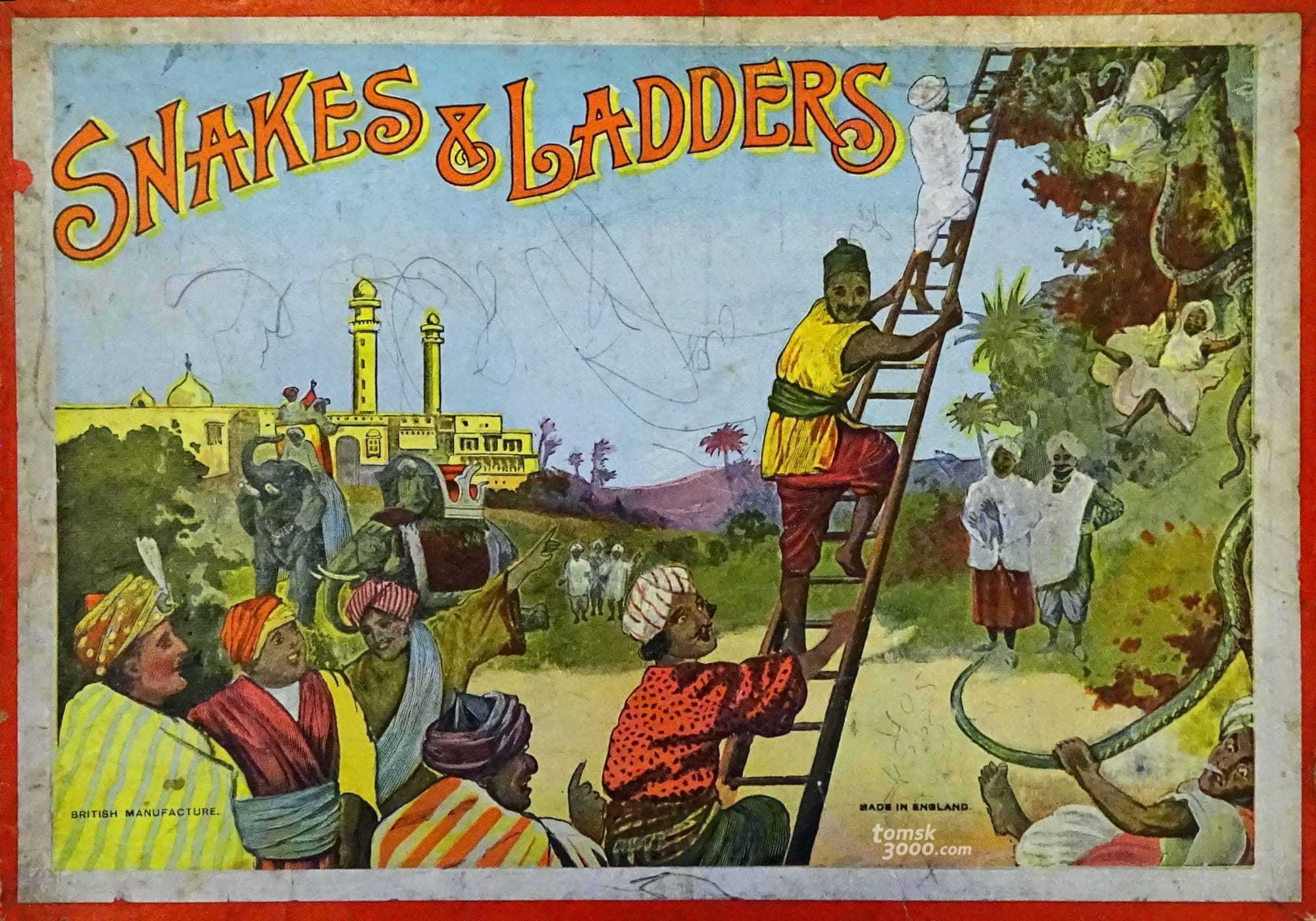
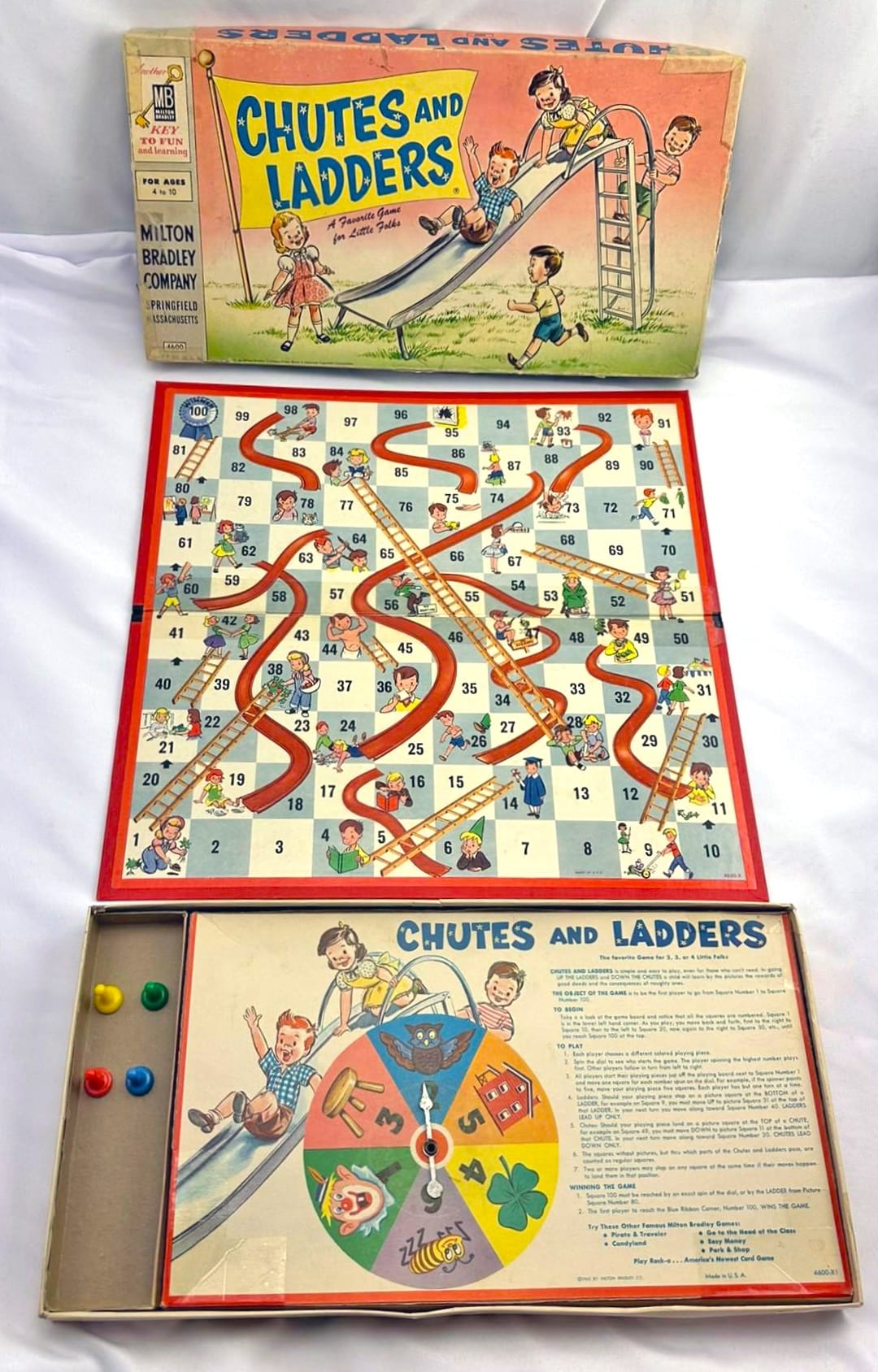
Left: The cover of a British Snakes and Ladders from the 1910s. Source: Tomsk3000. Right: An early American version of Chutes and Ladders from Milton Bradley. Source: Facebook.
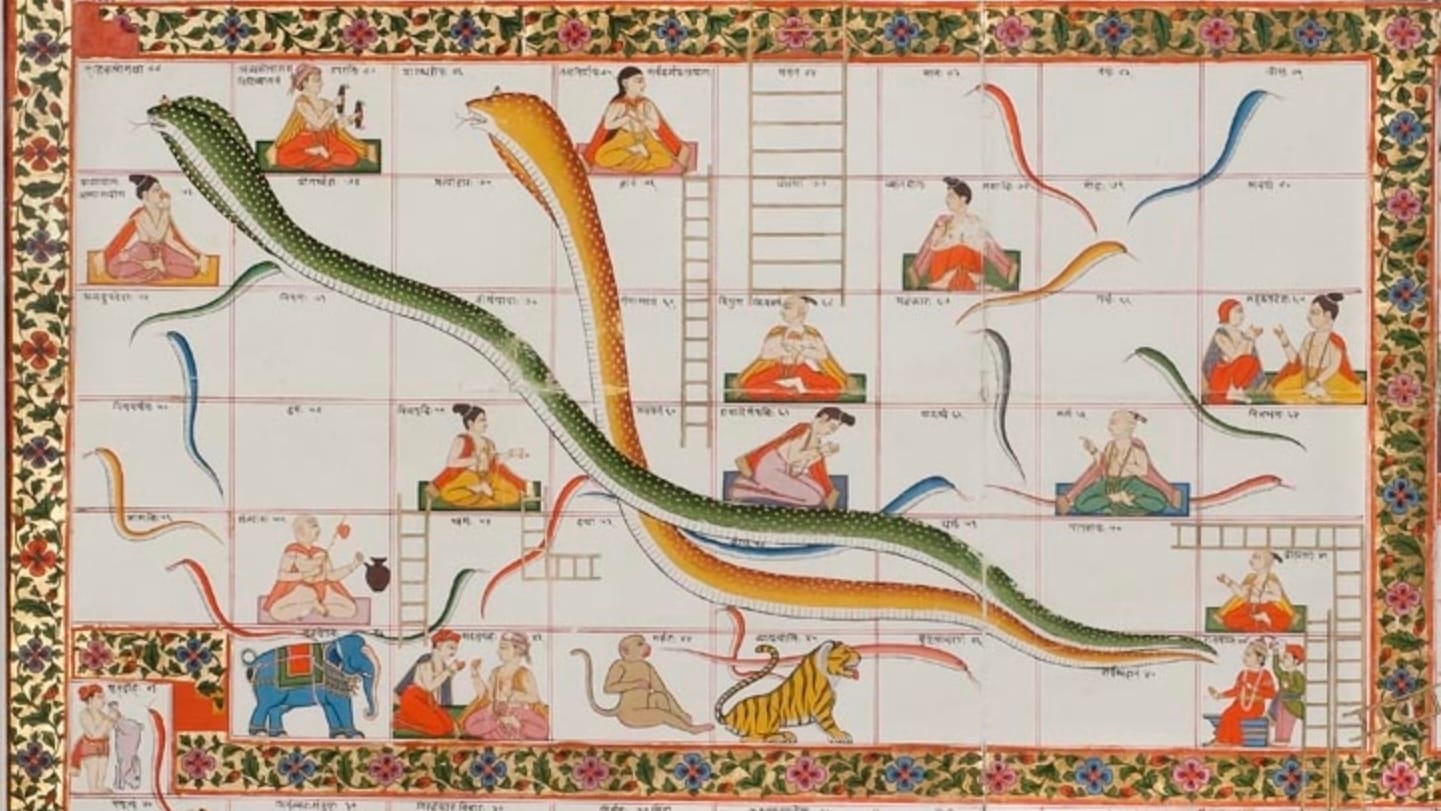
One of my favorite ways to show these cross-cultural exchanges is by focusing on the board game Snakes and Ladders. For many Americans, we grew up playing this game as Chutes and Ladders. It was one of my favorite childhood games. I first learned about the fascinating history of this game at the Asia Society’s special exhibition, “Asian Games: The Art of Contest.” I was surprised to learn that a game I loved playing as a child was originally an Indian game. When I began researching this post, I was even more surprised to find out how much this game exemplifies South Asia’s history of cross-cultural exchanges. Using Snakes and Ladders, we can help students see the rich and complex South Asian cultural mosaic.
South Asian Origins
This content is for Paid Members
Unlock full access to Liberating Narratives and see the entire library of members-only content.
SubscribeAlready have an account? Log in