“Living Between Worlds”: Global Migration Since 1960
Discussion of teaching contemporary global migration


From the start of modern migration in 1700 to the 1920s, migration patterns were relatively easy to teach students. In the eighteenth century, the transatlantic slave trade was the only example of modern migration. During the nineteenth century, the African slave trade ended, and new migration patterns developed. Most people migrated from China, Europe, and India, although fewer people were migrating from other places. Most people migrated to the Americas and the Indian Ocean region, especially Southeast Asia.
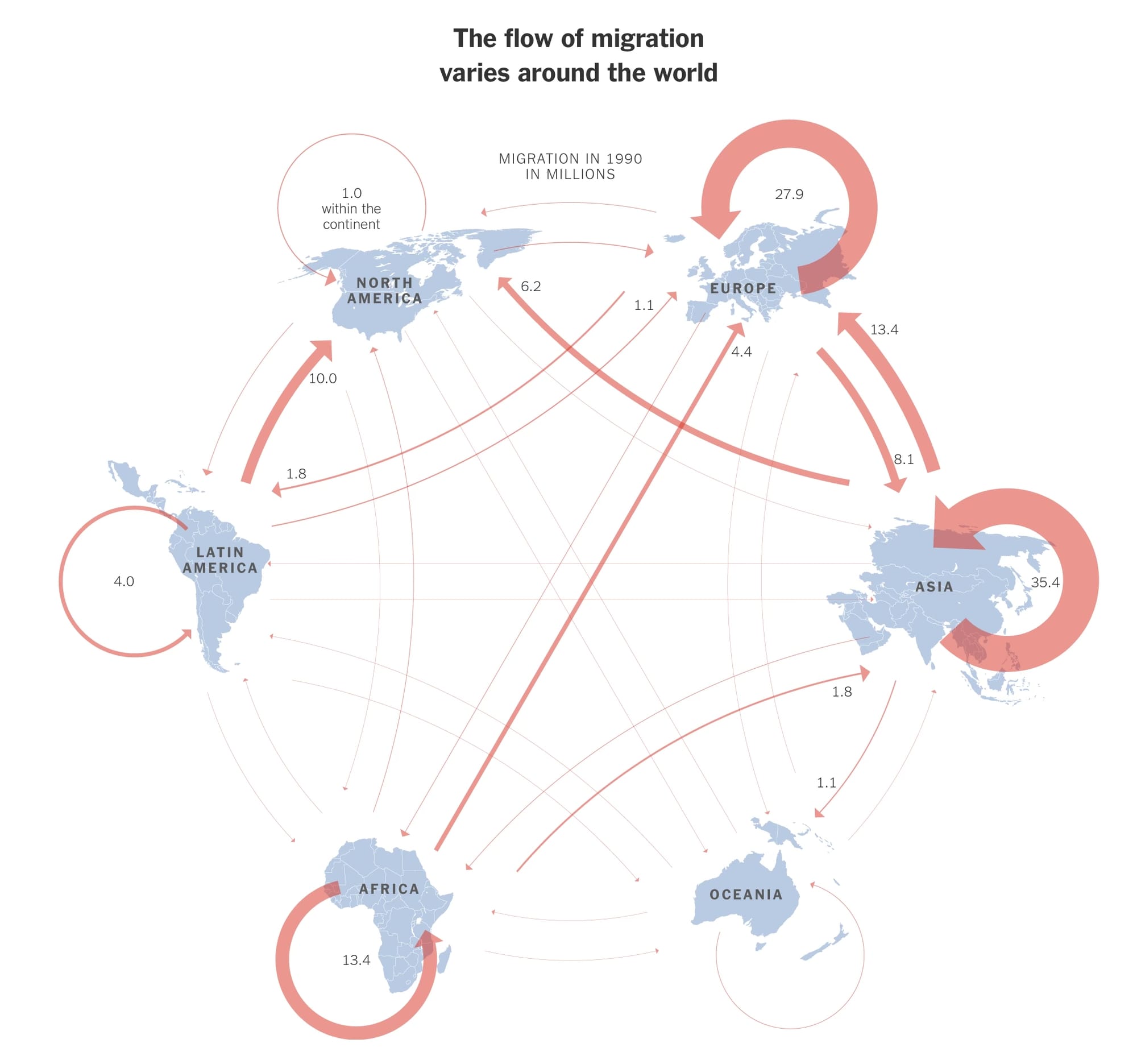
During the twentieth century, migration patterns became more complicated. In the last post, I discussed how migration to greater East Asia continued to grow in the 1930s while it declined in the White countries of the United States, Canada, Australia, and New Zealand. When global migration began to increase after 1960, the countries people migrated from and where they migrated to changed, although there were some continuities. Focusing on Turkish migration to Germany and South Asian migration to the Gulf, we can help students see how contemporary global migration both continued existing migration patterns and introduced new ones.
Contemporary Global Migration Patterns
This content is for Paid Members
Unlock full access to Liberating Narratives and see the entire library of members-only content.
SubscribeAlready have an account? Log in