“Singing Two Different Lullabies at the Same Time”: Using Political Cartoons to Teach British Palestine, 1936-1948
Discussion of Palestinian and Jewish political cartoons from the 1930s and 1940s

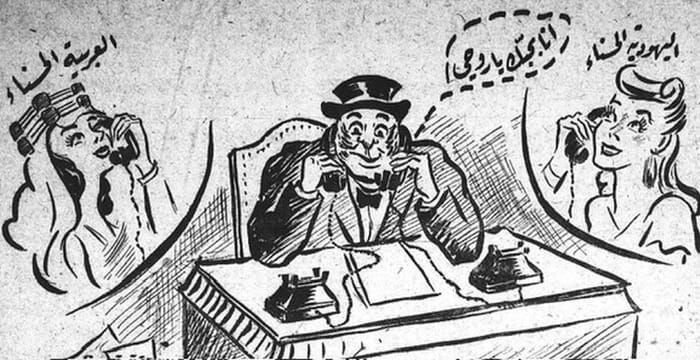
In my previous post, I focused on British Palestine from 1920 to 1936. During that first phase of the British Mandate, the possibility of Jewish and Palestinian peaceful coexistence still seemed imaginable. Palestinian and Jewish workers talked about working together, and Judah Magnes, the president of the Hebrew University, spoke about building a state with Arabs. Those visions of cooperation became increasingly difficult to imagine after 1936. Between the outbreak of the Great Palestine Revolt in 1936 and the 1948 Palestine War, Jews and Palestinians increasingly viewed each other as rivals. Despite their resentment toward each other, they also both increasingly directed their anger at the British.
This shared frustration with the British is an important reminder that Palestine was a British colony. When teaching the shared history of Palestinians and Israelis, we can have students learn about this period through the context of interwar anticolonialism. Both Zionist Jews and Palestinians saw the British as a problem needing to be addressed. We can also help students understand this perspective by focusing on political cartoons between 1936 and 1948.
British Palestine, 1936 - 1948
This content is for Paid Members
Unlock full access to Liberating Narratives and see the entire library of members-only content.
SubscribeAlready have an account? Log in