“Things Have Gone From Bad to Worse”: Five Strategies for Teaching New Imperialism in Africa
Teaching the Scramble of Africa from an African perspective

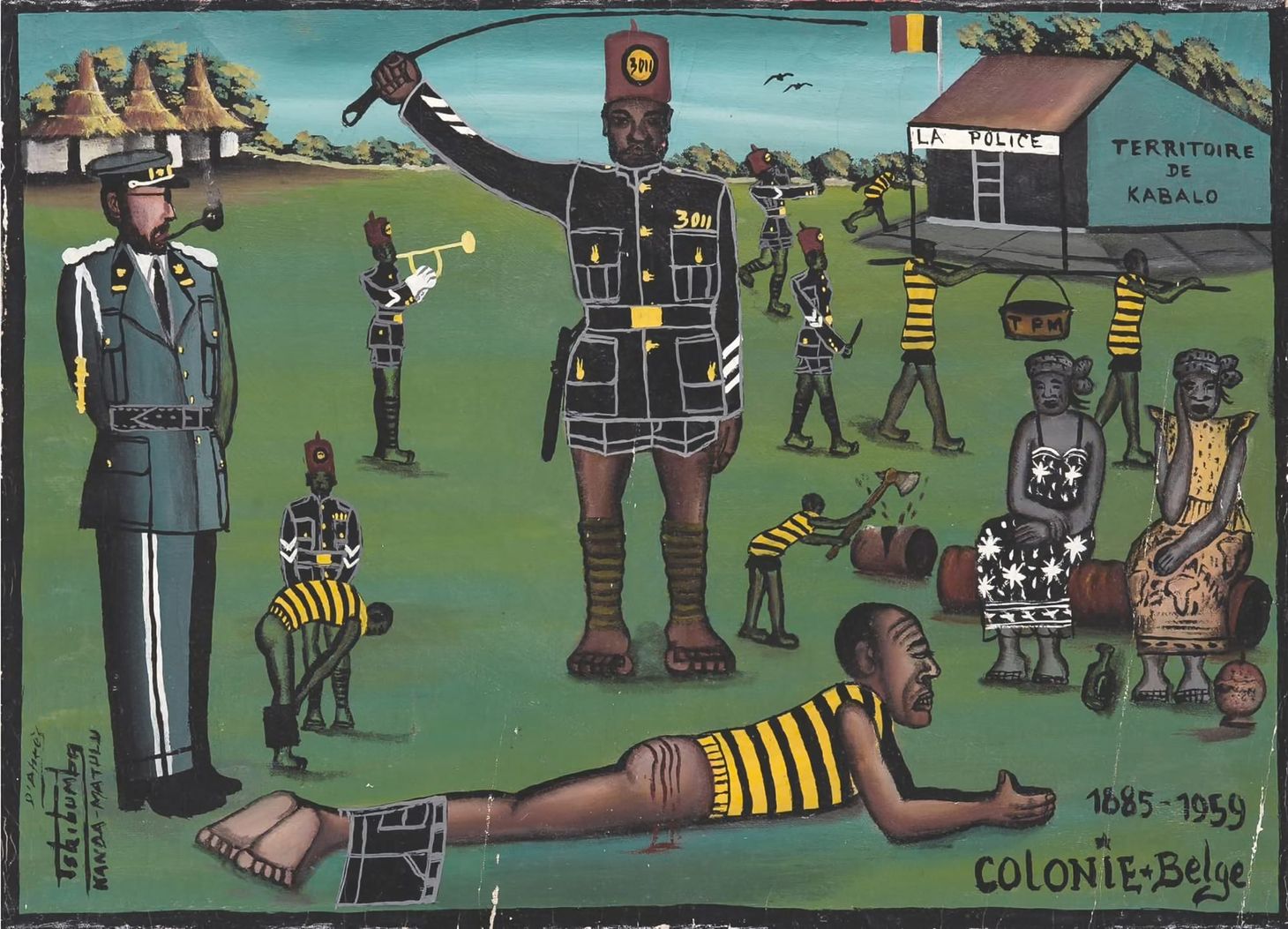
Seven years ago, I wrote about teaching the “Scramble for Africa” in a more mindful way. That post has consistently been the most read post on Liberating Narratives; each month, new visitors find the post. I still feel good about the main arguments, but I would change some things. To start, I didn’t mention any textual primary sources. There are two visual primary sources, but no textual sources. Whenever we teach history, we need to have students engage with the ideas of people living at the time. In this post, I’ll discuss five approaches to teaching the European colonization of Africa. Each section will include primary sources that can be easily adapted for the classroom.
The Road to the European Colonization of Africa
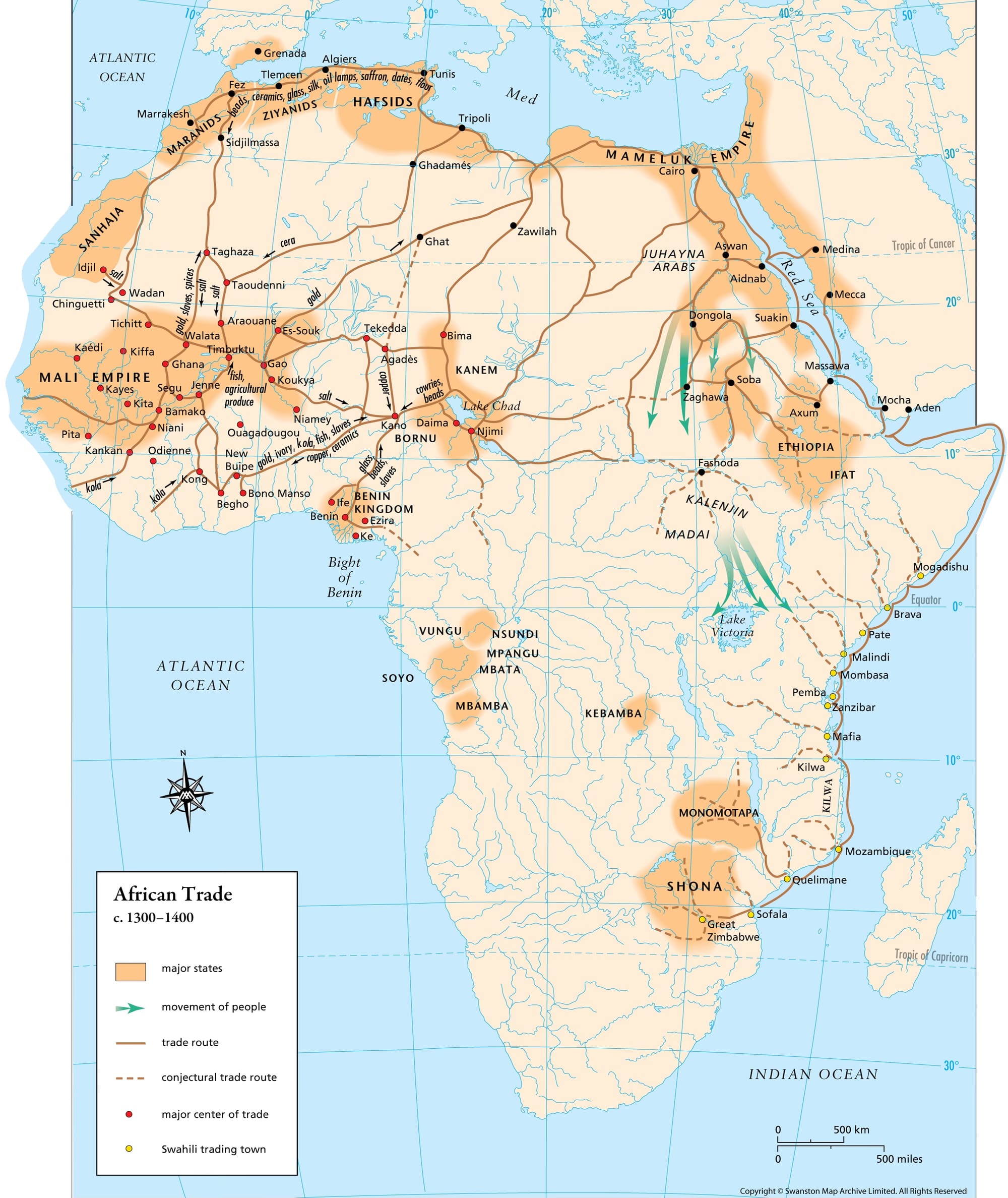
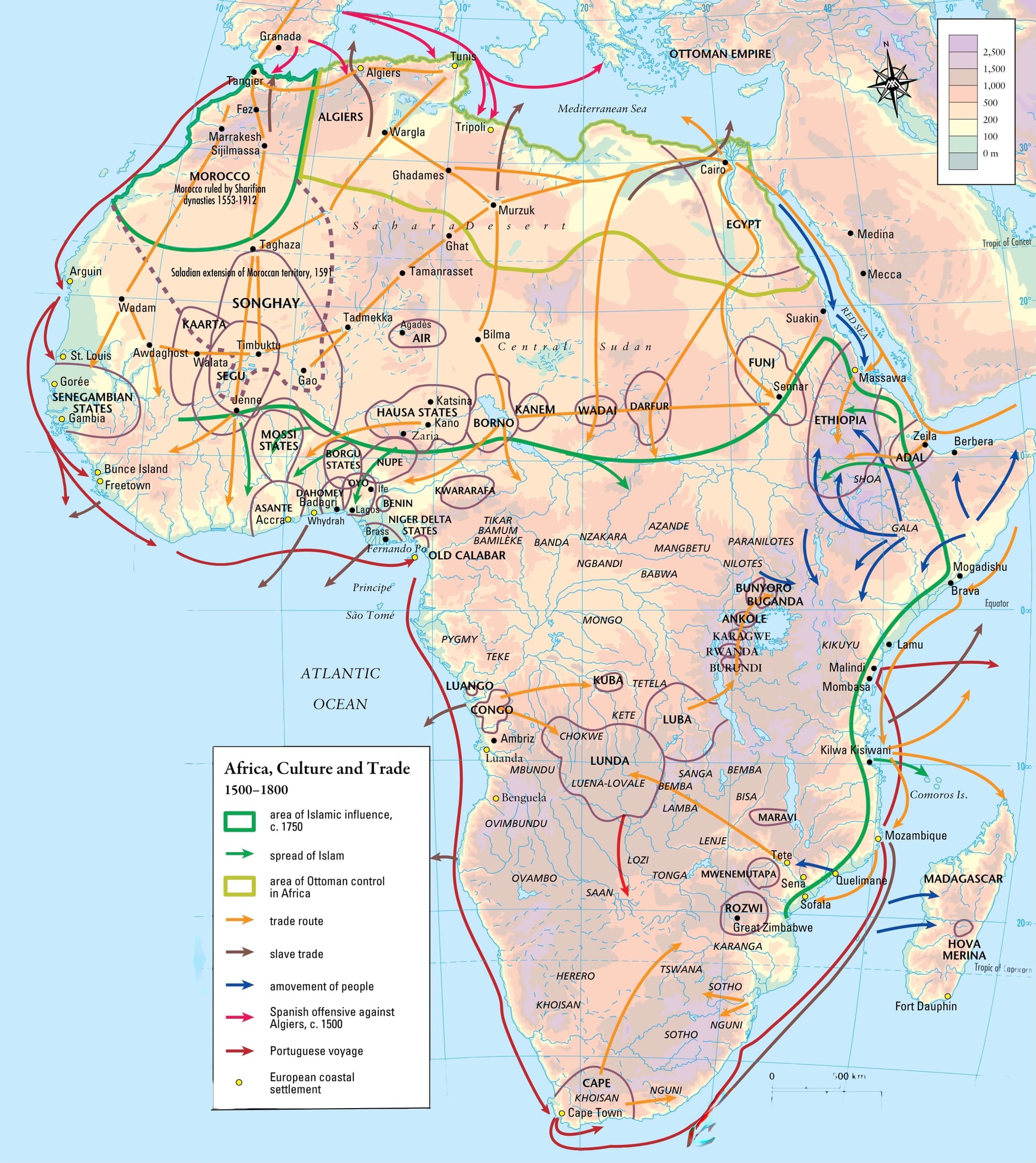
Left: African Trade in the 1300s. Source: The Map Archive. Right: African Culture and Trade, 1500-1800. Source: The Map Archive.
Europe’s late nineteenth-century colonization of Africa grew out of existing patterns of exchange and contact, but it also marked a significant shift. Africans had regularly traded with people from the rest of Afroeurasia for centuries. The two maps above can help students quickly see that Africa wasn’t isolated, but was part of a larger Afroeurasian economic system.
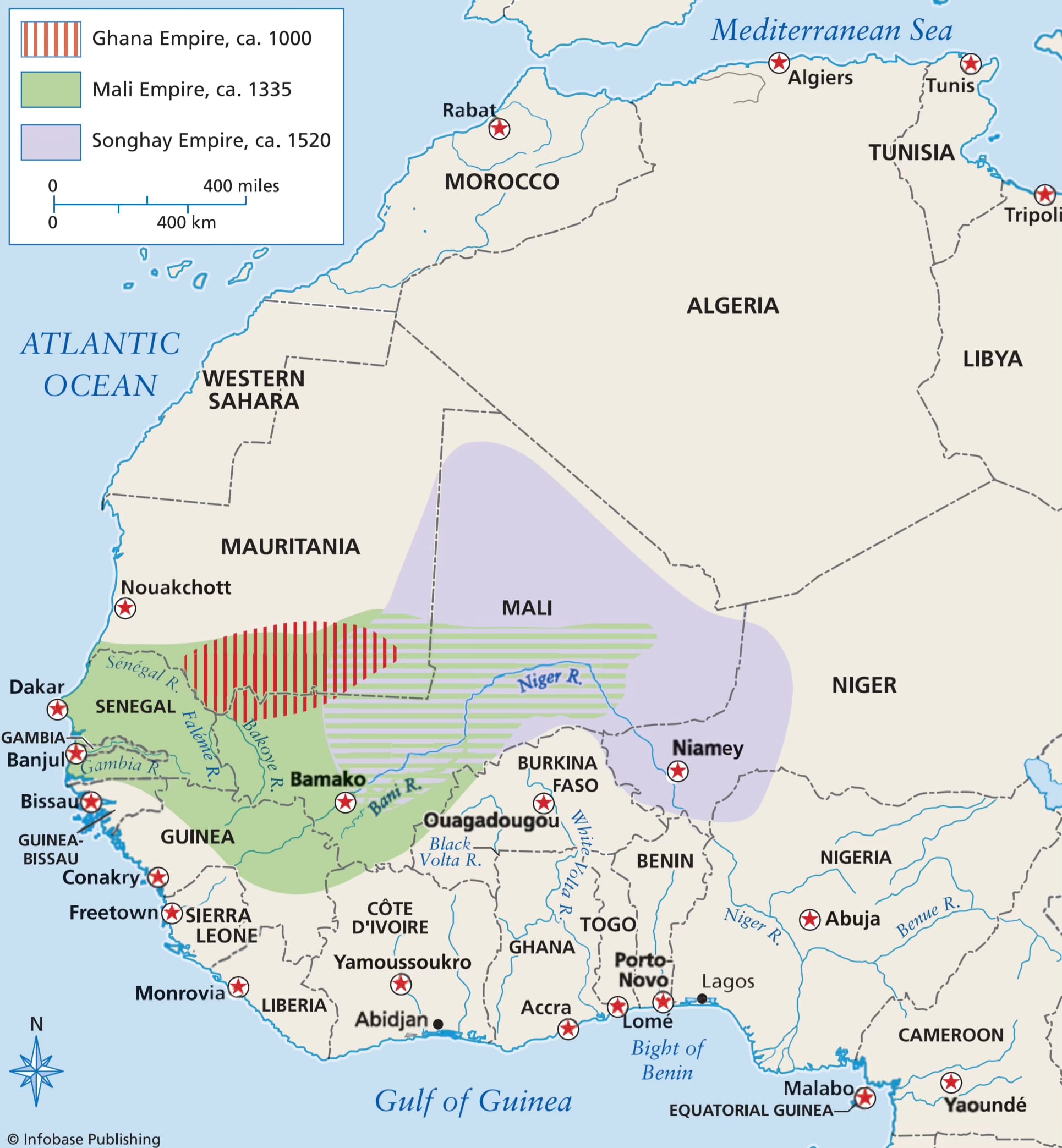
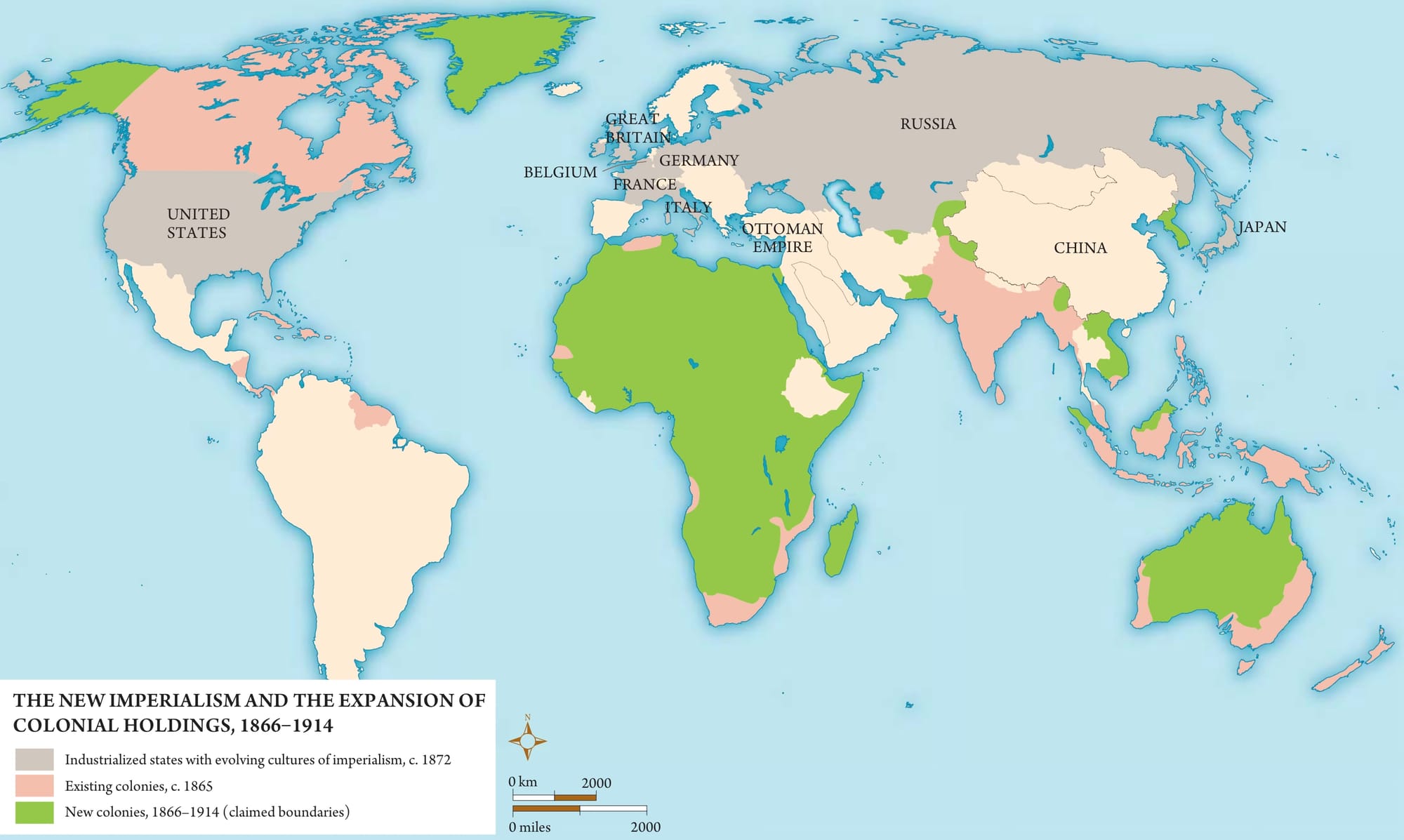
Left: The three West African empires. Source: Unknown. Right: New Imperialism. Source: Empires and Colonies in the Modern World: A Global Perspective.
When Europeans began colonizing Africa in the nineteenth century, it marked a significant break from earlier periods. Africa had been home to empires for centuries, but the land empires of Western Africa were qualitatively different from European empires. The Mali and Songhay ruled over different ethnic groups across West Africa, but they weren’t trying to impose an alien culture or fundamentally restructure societies and economies. Western European New Imperialism was a new type of empire. In the words of James Carter and Richard Warren in Forging the Modern World: A History, New Imperialism “was driven and facilitated by industrialization,” and “was both more extensive and more intensive than [earlier] imperial dynamics.” Because of technological advances, Europeans both conquered far more territory than earlier empires and significantly restructured the societies they conquered.
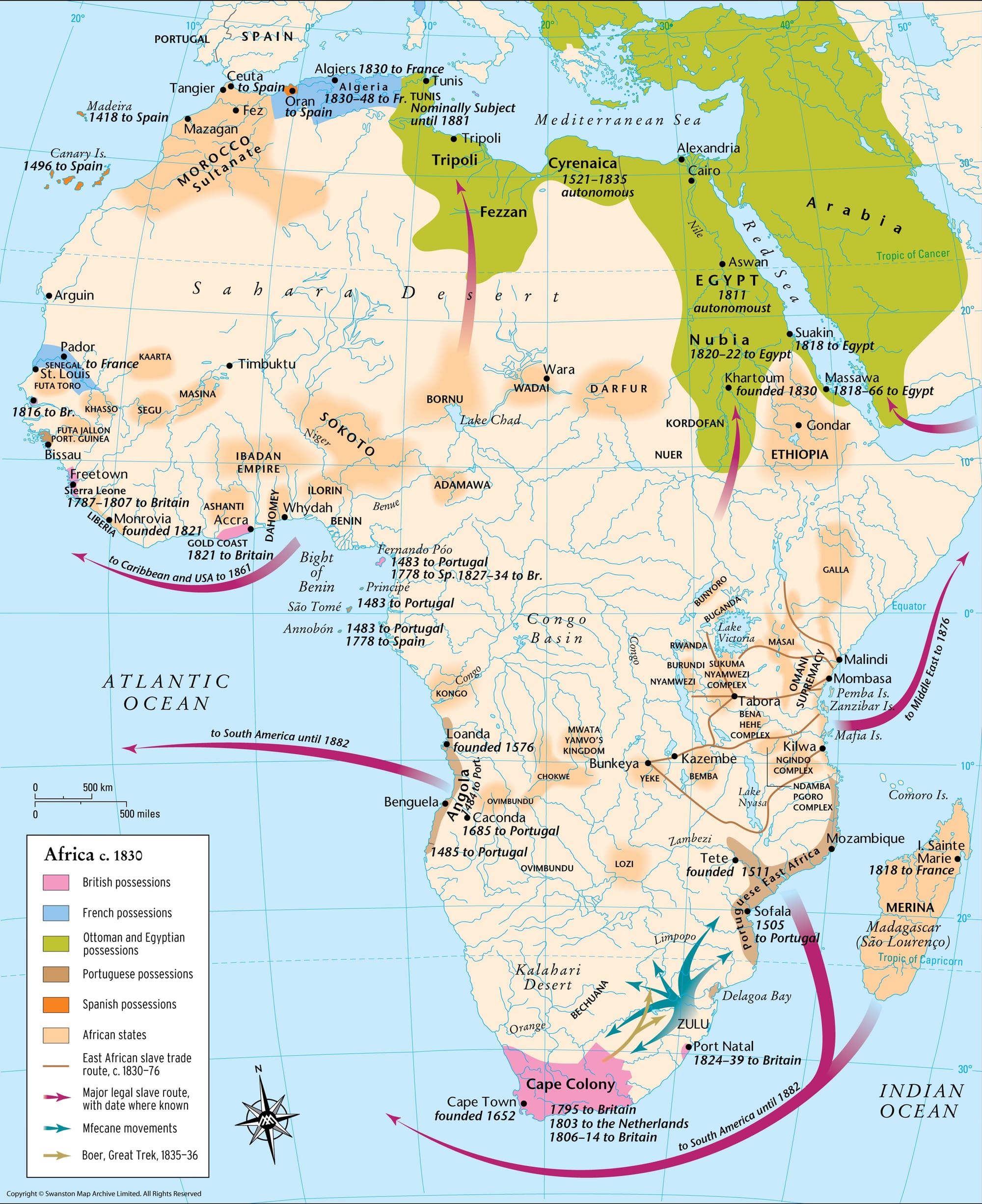
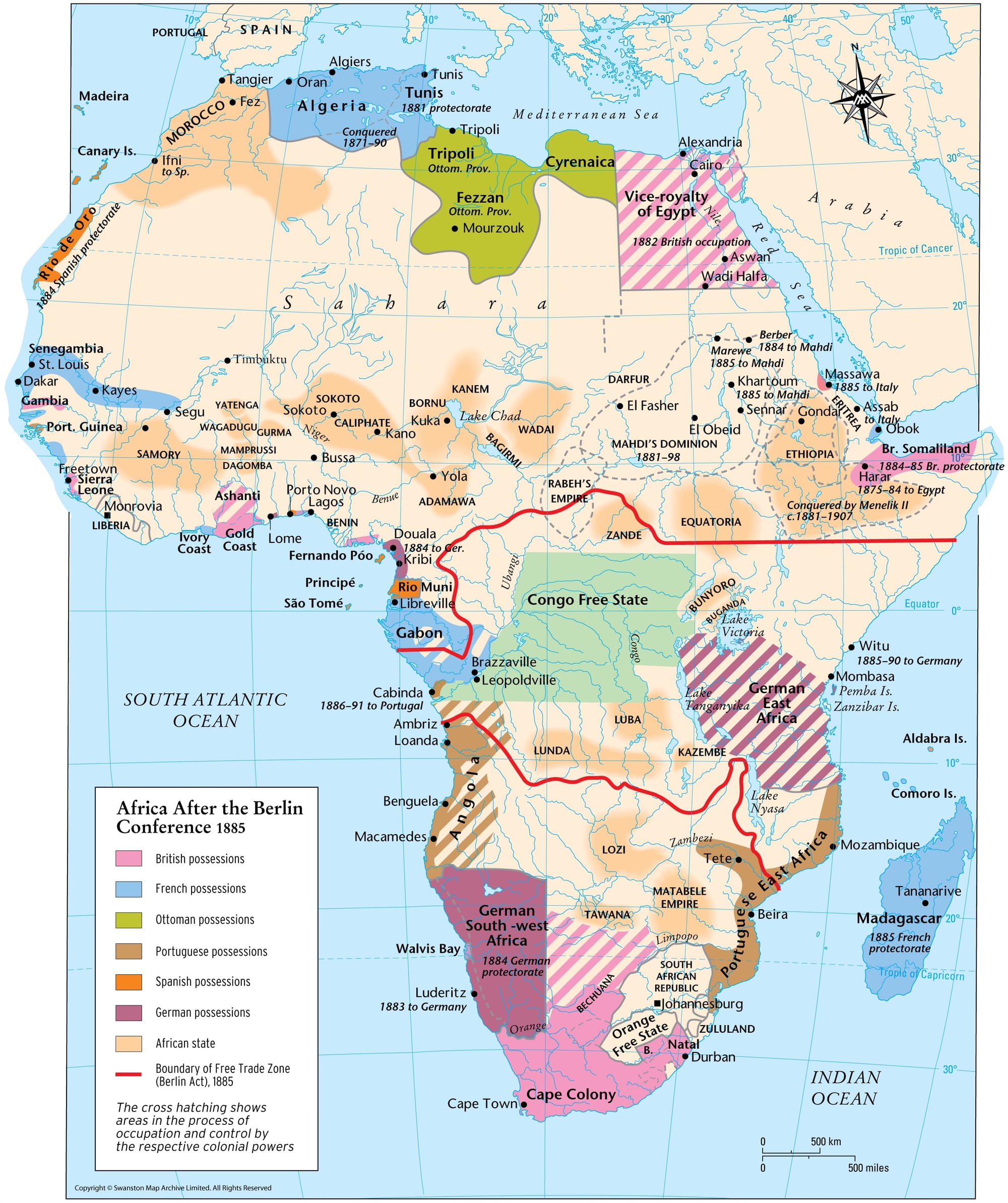
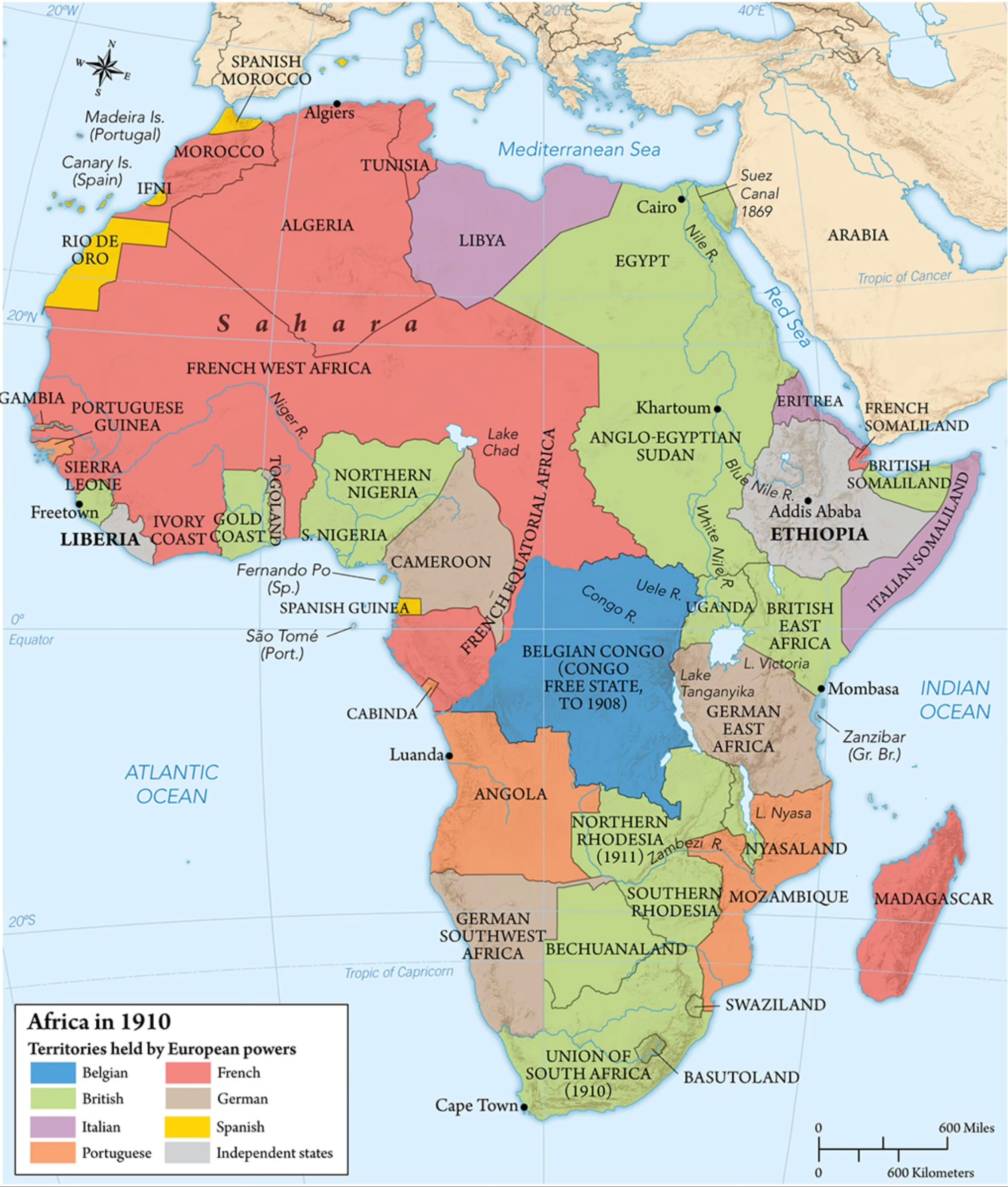
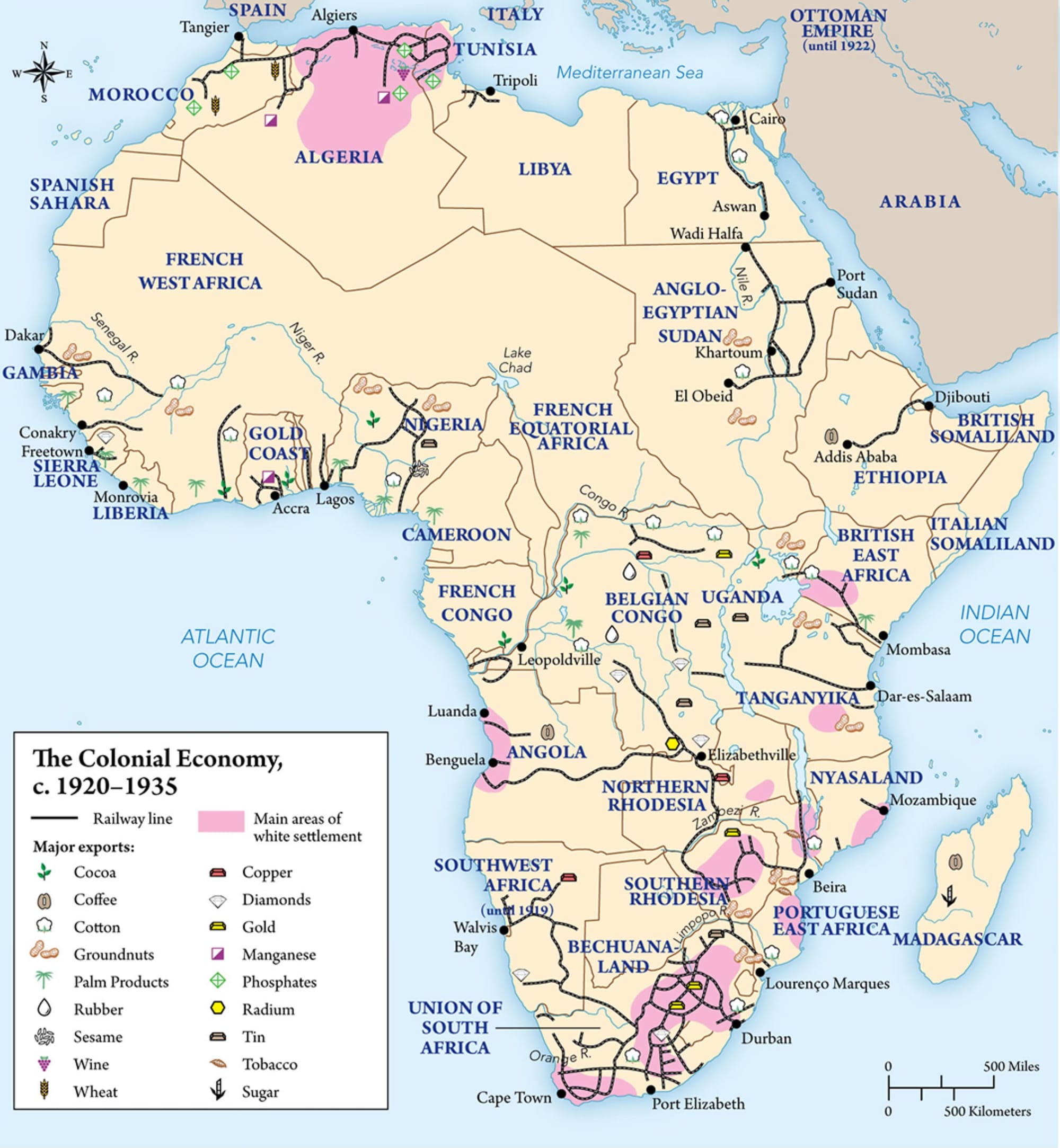
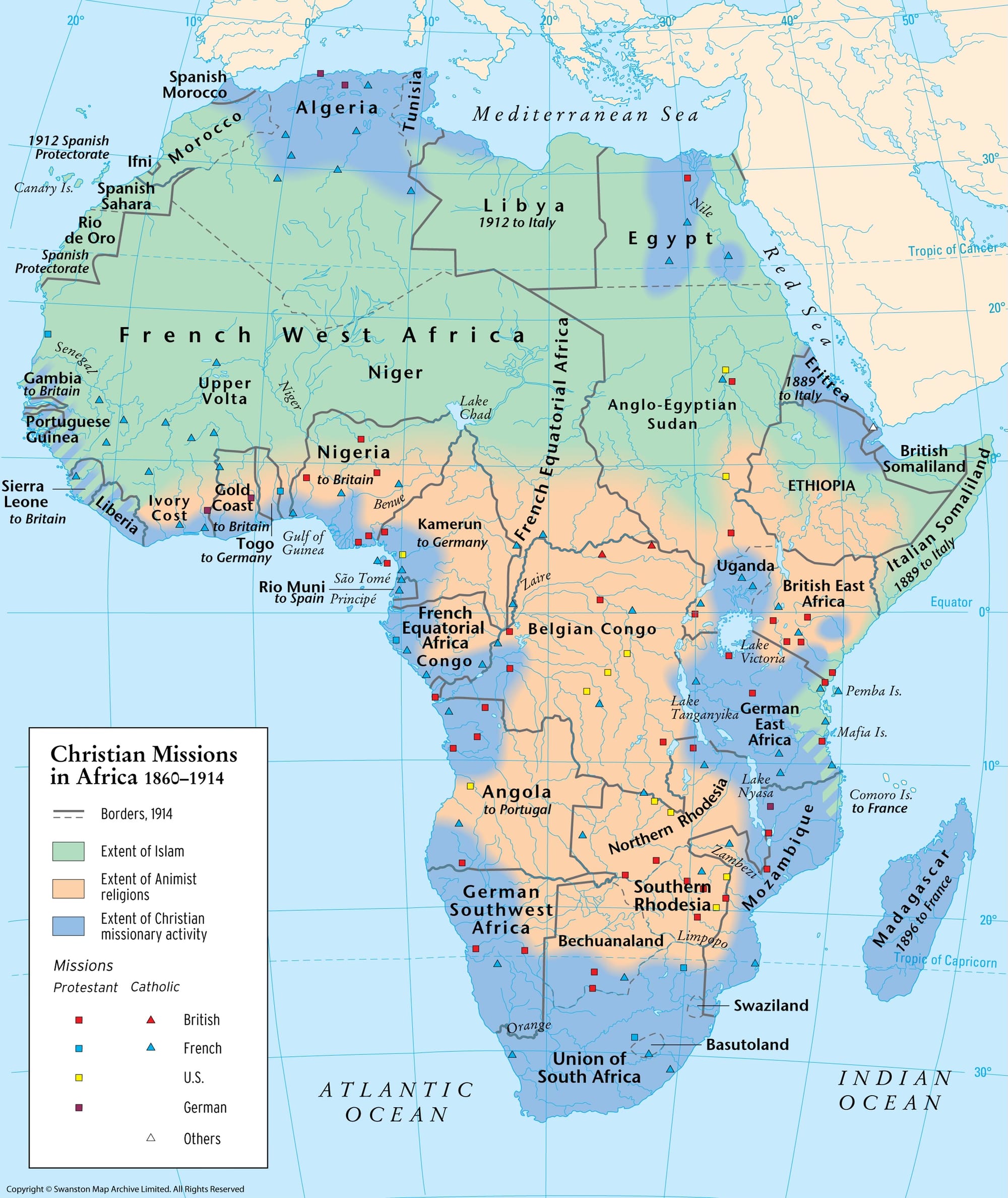
Africa in 1830. Source: The Map Archive. Africa after the Berlin Conference. Source: The Map Archive. Africa in 1910. Source: Falola and Stapleton’s A History of Africa. Africa’s colonial economy. Falola and Stapleton’s A History of Africa. Christian Missions in Africa. Source: The Map Archive.
The five maps above can help students see how Europeans went from controlling relatively little of Africa in 1830 to colonizing almost the whole continent by 1910. The notable exception was Ethiopia, which had defeated an Italian invasion attempt. Liberia was also technically independent, but closely connected to the United States. Not only did Europeans control most of Africa, but the last two maps also show their cultural and economic influence. Europeans sent missionaries across Africa in hopes of converting Africans to Christianity. Europeans also fundamentally transformed the African economy from a more self-sufficient one to one dependent on producing commodities for export. These cultural and economic shifts were part of the “intensive” transformations of New Imperialism.
Fewer Conquests, More Causes
Source: By History Gal.