Skip to content

“To Fight to the Last”: Historical Imagination and African Resistance to New Imperialism

Discussion of how to have students write creatively about African resistance to New Imperialism.

Bram Hubbell
Bram Hubbell
5 min read
“To Fight to the Last”: Historical Imagination and African Resistance to New Imperialism

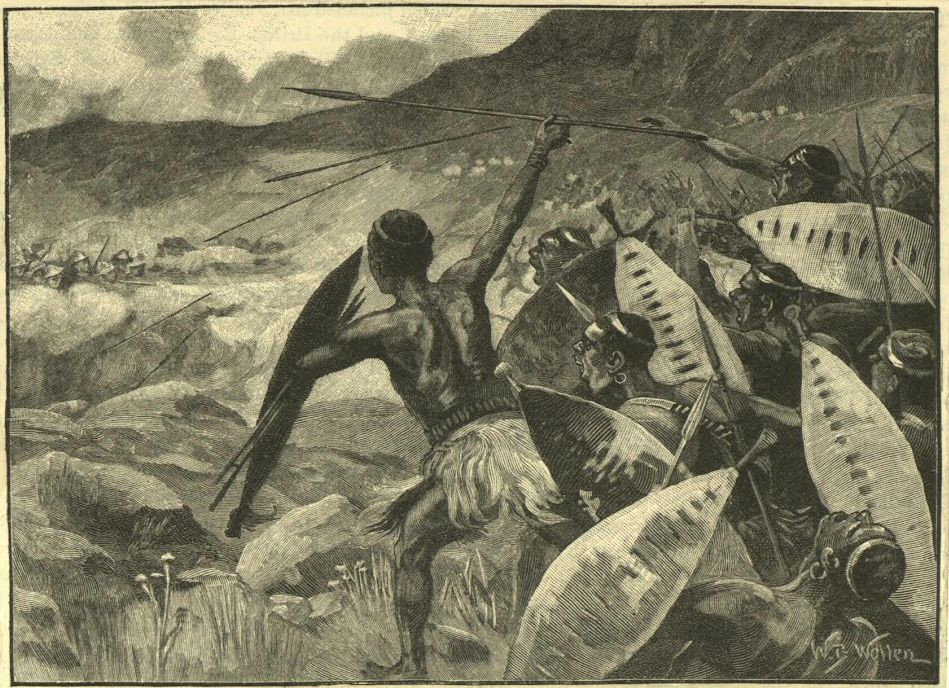
Before I began this recent series of posts on New Imperialism, I spent a month writing about historical imagination and creative writing. In those points, I included writing prompts that I used with students. I wanted to share a bonus post with all subscribers. In this post, I’ve included one more prompt that allows students to write about how Africans resisted imperialism in the late nineteenth century.
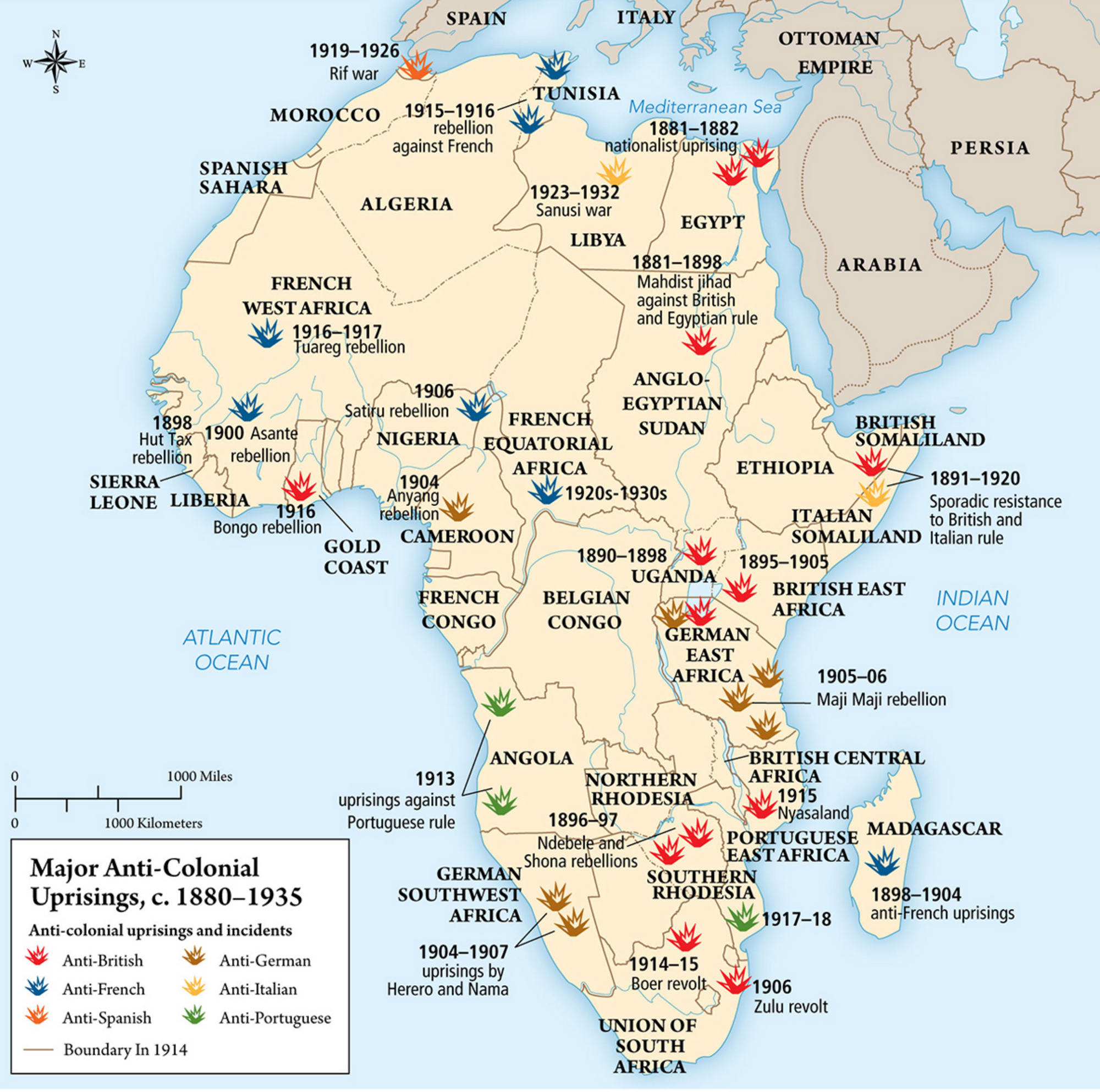
African resistance to European rule. Source: Falola and Stapleton’s A History of Africa.

Two British Views of Colonization in Africa

I recently discussed Frederick Lugard’s view of the British colonization of Africa. In his self-congratulatory The Rise of Our East African Empire, Lugard made the bold claim that Africans did not resist the British rule because of the nature of British rule and the nature of Africans:
Related Posts

Members Public

“Do not Mention the Word Surrender”: New Imperialism and the Persistence of Resistance in French Indochina

Cambodians and Vietnamese repeatedly challenged French imperialism

“Do not Mention the Word Surrender”: New Imperialism and the Persistence of Resistance in French Indochina
Members Public

“A Situation of Complete Inertia and a Widespread Apathy”: Teaching Everyday Resistance to French Imperialism in Senegal in the 1920s and 1930s

What were the weapons of the weak in French Senegal?

“A Situation of Complete Inertia and a Widespread Apathy”: Teaching Everyday Resistance to French Imperialism in Senegal in the 1920s and 1930s
Members Public

The Changing Role of Government Involvement in the Economy in the 1930s

Teaching how states worldwide took a more active approach to directing economic development in the 1930s

The Changing Role of Government Involvement in the Economy in the 1930s