“Distant Parts of the World are Connected with One Another”: The Causes of the First Global Economy
Using maps to teach the causes of the first global economy

In 1776, Scottish economist Adam Smith published An Inquiry into the Nature and Causes of the Wealth of Nations (often called The Wealth of Nations). Smith discussed the principles of economic liberalism, but he also described some of the key features of the Early Modern First Global Economy:
But in the East Indies, particularly in China and Indostan [India], the value of the precious metals, when the Europeans first began to trade to those countries, was much higher than in Europe; and it still continues to be so... It is more advantageous too to carry silver thither than gold; because in China, and the greater part of the other markets of India, the proportion between fine silver and fine gold is but as ten, or at most as twelve, to one; whereas in Europe it is as fourteen or fifteen to one. In China, and the greater part of the other markets of India, ten, or at most twelve, ounces of silver will purchase an ounce of gold: in Europe it requires from fourteen to fifteen ounces. In the cargoes, therefore, of the greater part of European ships which sail to India, silver has generally been one of the most valuable articles. It is the most valuable article in the Acapulco ships which sail to Manilla. The silver of the new continent seems in this manner to be one of the principal commodities by which the commerce between the two extremities of the old one is carried on, and it is by means of it, in a great measure, that those distant parts of the world are connected with one another.
While Smith described the movement of silver from the Americas to Asia via European ships, many others had previously discussed the importance of silver to the first global economy. In 1630, He Qiaoyuan, a Ming Dynasty official and a native of Fujian Province, described China’s participation in the first global economy:
By the "Eastern Ocean" we mean Luzon (the largest island in the Philippines, which is home to Manila), which is populated by the Portuguese [sic]. Their country contains silver mountains, the product of which the foreigners mint into silver coins in prodigious quantities. When our Chinese subjects journey to trade in the «Western Ocean» (i.e., continental Southeast Asia and the Indian Ocean) they trade the goods we produce for the goods of others. But when engaging in Luzon they have designs solely on silver coins…. A hundred jin of Huzhou silk yarn worth 100 taels of silver can be sold at a price of 200 to 300 taels there. Moreover, porcelain from Jingdezhen as well as sugar and fruit from my native Fujian all are avidly desired by the foreigners.
Although He mistakenly thought the Portuguese, and not the Spanish, ruled the Philippines, he clearly understood the importance of silver and Manila to world trade and how this trade benefited the Chinese economy.
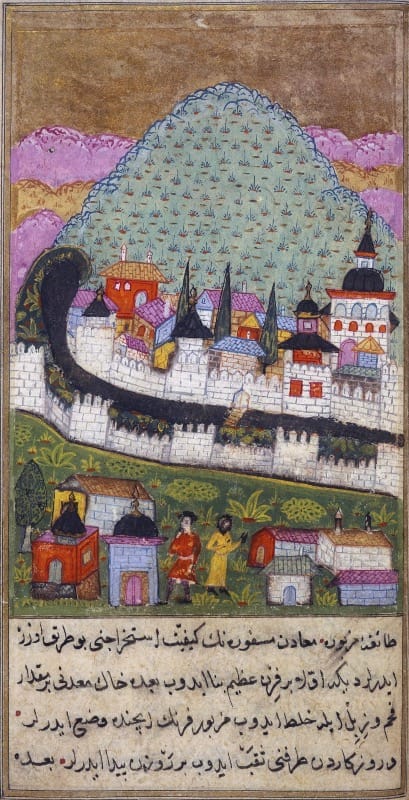
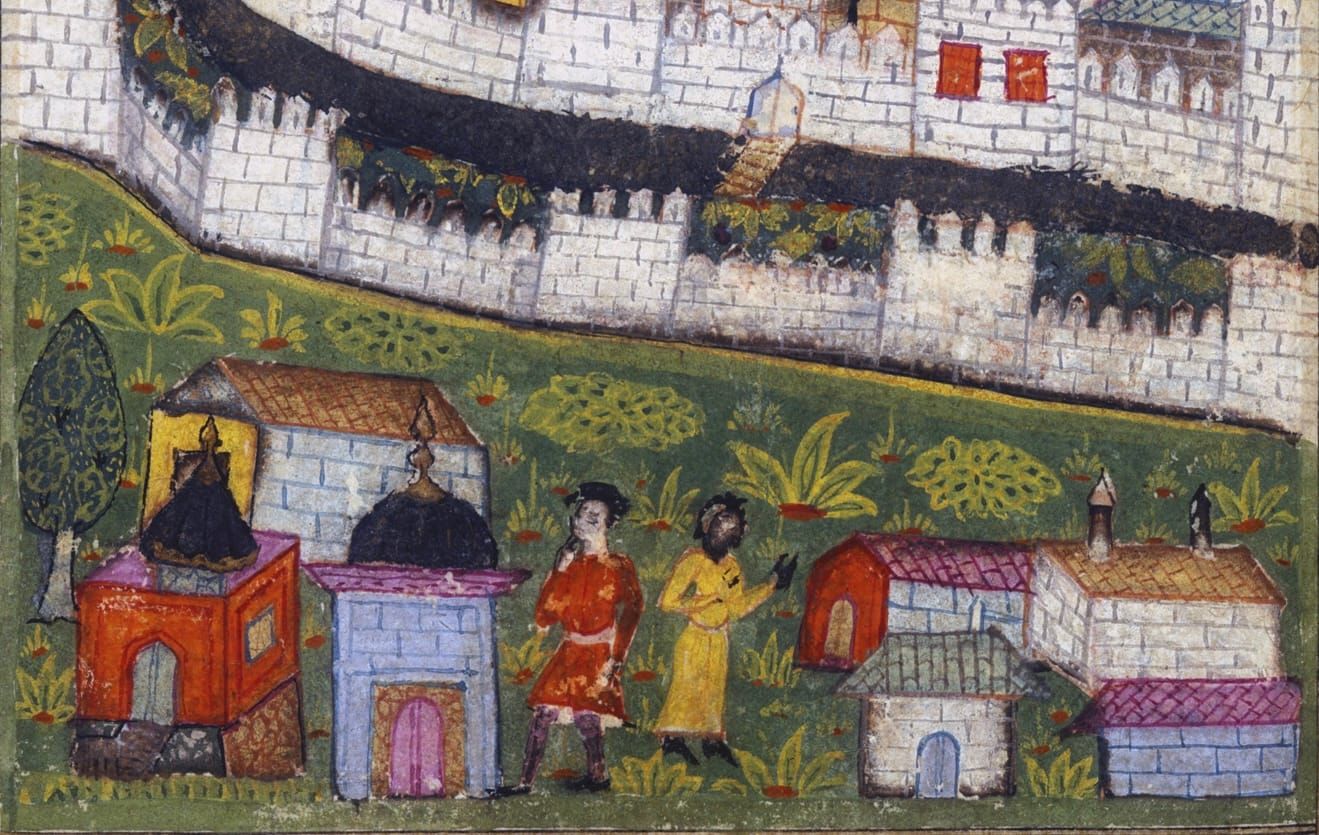
Almost fifty years earlier, an unknown Ottoman author wrote the Tarih-i Hind-i Garbî, a book describing the Americas. He included an illustration of Cerro Rico, the mountain of silver in Potosí, and described how the silver was processed. The large mountain appears in the background of the painting. In the foreground are two men with different skin tones, clearly indicating the role Potosí played in connecting people from across the world.
These three sources show that people around the world were aware of the first global economy. Even though people in the seventeenth and eighteenth centuries knew the global economy was interconnected, they most likely didn’t know why. In this post, I will discuss how we can use maps to help students visualize the extent of the first global economy and its causes.
From Regional Economies to the First Global Economy
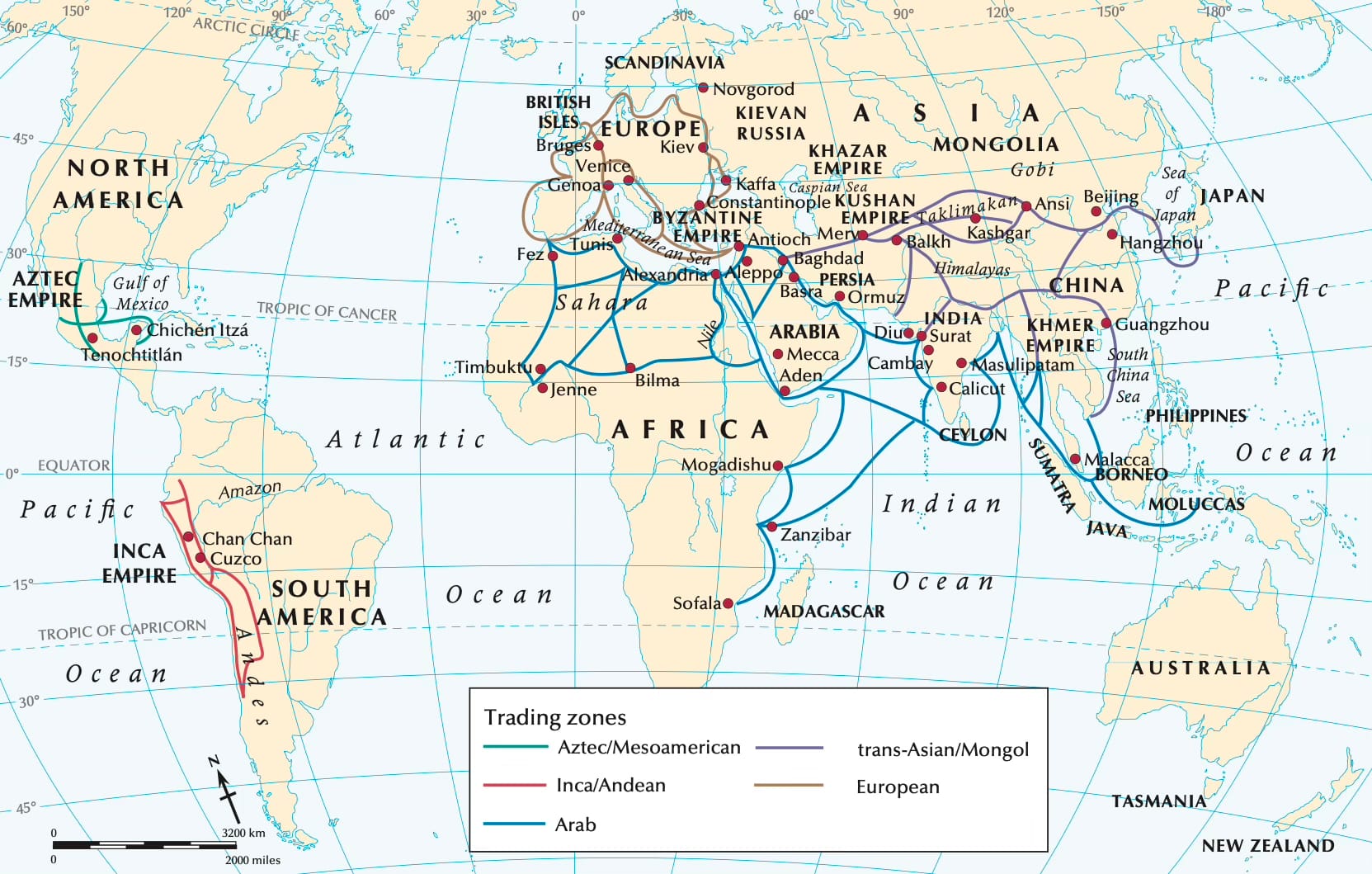
Before 1450, there was no single global economy. Instead, separate Afroeurasian and American regional economies were made up of interconnected smaller trade networks. The map above illustrates these two large macro-regional economies and their smaller trade networks.
This content is for Paid Members
Unlock full access to Liberating Narratives and see the entire library of members-only content.
SubscribeAlready have an account? Log in