“The Finest and Most Fruitful Country in the World”: The Importance of Agriculture in the First Global Economy
Teaching the Centrality of Agriculture to the First Global Economy

In the 2026 elections, the War in Iran’s effect on the price of gasoline, especially diesel, and AI data centers influenced voters’ choices. These two concerns reflect seemingly opposite ends of the current American economy. Data centers are a luxury item that power the most cutting-edge technology. Diesel powers the tractors needed on America’s farms. As many candidates realized in elections across the country, both “halves” of the American economy matter.
The same was true in the First Global Economy. For the past month, I’ve discussed luxury items such as porcelain and silver, which were important components of the global economy in the 1500s and 1600s. At the same time, we often overlook the other end of the spectrum. Agriculture, especially the farming of basic staple crops, was even more important than the luxury items we often focus on in world history courses.
In Forging the Modern World: A History, James Carter and Richard Warren begin their chapter on the first global economy emphasizing the centrality of agriculture:
In the early 1500s, about 80 percent of the world's population still tilled the soil or tended livestock to feed their families and passed some part of their production on as taxes to political, military, and religious authorities. Rural, agrarian peoples produced and distributed their bounty in diverse ways, often relying on long-standing traditions that governed their work… Most agricultural products were consumed very close to where they were grown. If they grew enough, rural producers could exchange some of their surplus for tools, beasts of burden, and maybe even some luxuries produced in distant locations.
Every time I read that quote, I would ask students to think about why Carter and Warren began a chapter on the first global economy by discussing agriculture. Most students focused on the 80%, but they often couldn’t articulate why it mattered. Like many history books, world history textbooks tend to focus on elites and only briefly mention what “most people” did.
While agriculture still matters today, it was even more important in the preindustrial world. Students today often aren’t familiar with farming. Many have grown up in urban and suburban settings, so they don’t see farming in their daily lives. They don’t understand what early modern agriculture looked like or why it mattered. Regions with productive agriculture were often the economic cores of the First Global Economy. In this post, I’ll share some textual and visual primary sources that can help students visualize Early Modern agriculture.
Farming Around the World
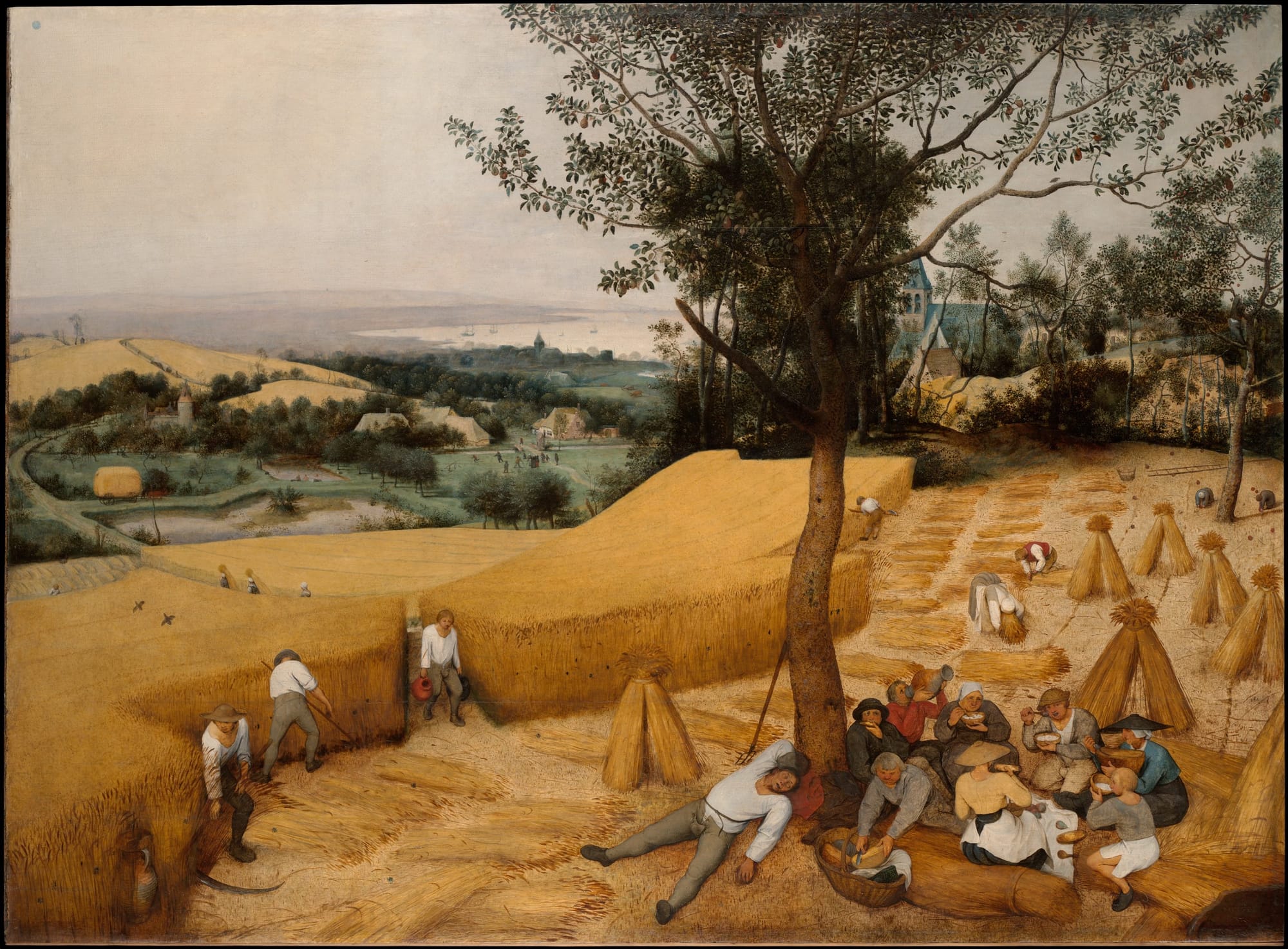
About ten years ago, I first looked for illustrations of Early Modern farming. I wanted to help students visualize how people farmed. Pieter Bruegel the Elder’s The Harvesters was easily the painting that appeared most often, and it still seems that way. Bruegel captured the hard work of farmers during harvest season. We see men scything the wheat, women carrying bundles down to the village, and another group taking their midday break in the shade of a tree. When you zoom in on the painting and look at the background, you can see nearby Antwerp and ships in the harbor. The Harvesters is an excellent painting to use in the classroom.
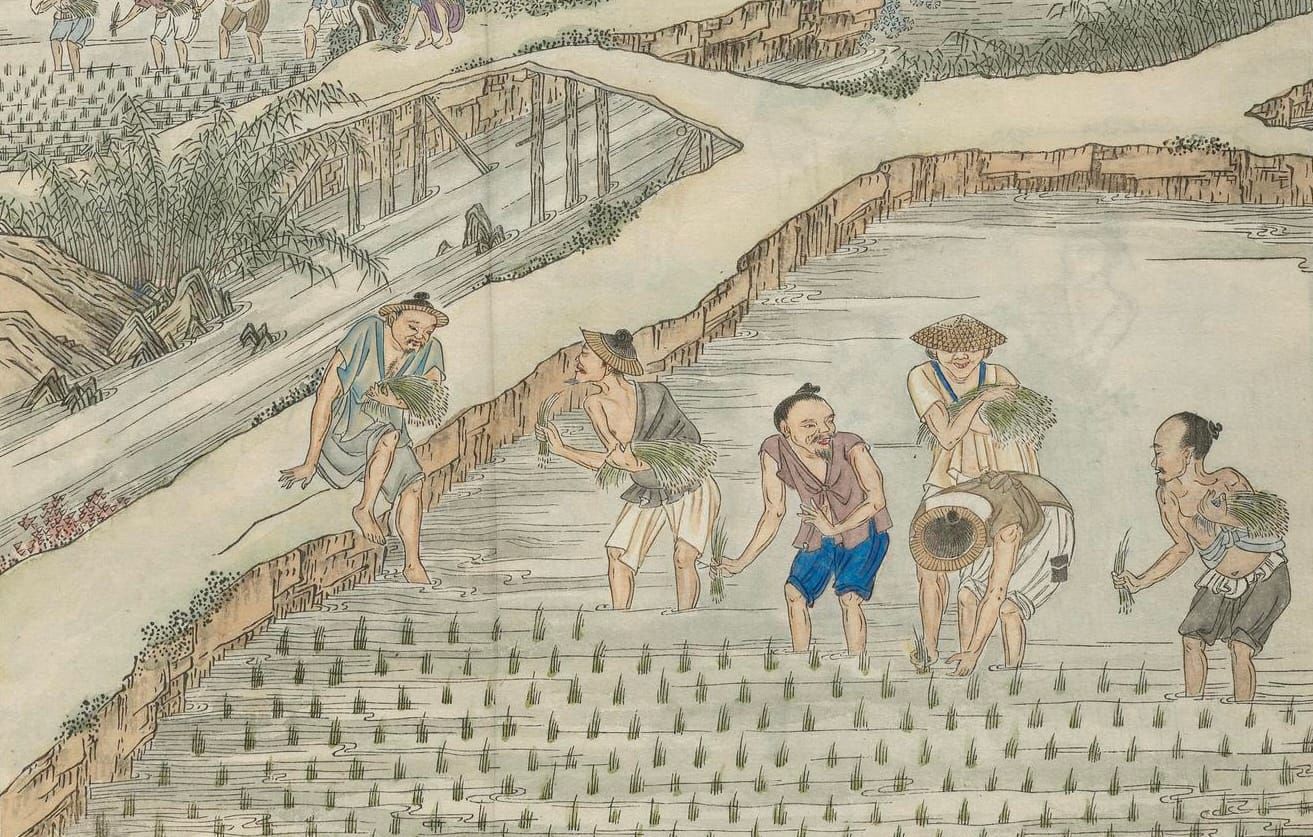
While the painting can help students visualize farming, it also shows what farming looked like in northern Europe. Northern European farming focused more on wheat as the staple grain and was less productive than many other parts of the world. I put together paintings of farming from other parts of the world.