“Our Uzbek History is Tied Up with Cotton”: Cotton in Late Imperial Russian and Soviet Central Asia
Teaching Russian and Soviet Colonialism

In 2016, I found myself admiring a beautiful mosaic in Paxtakor metro station. I was in Tashkent, Uzbekistan at the start of an overland journey across the Silk Roads. Tashkent’s Metro system has become a must-see destination for travelers. After a 1966 earthquake devastated much of the city, the Soviet Union rebuilt Tashkent as a model city. This vision included a beautiful metro system filled with marble walls, statues, and mosaics.
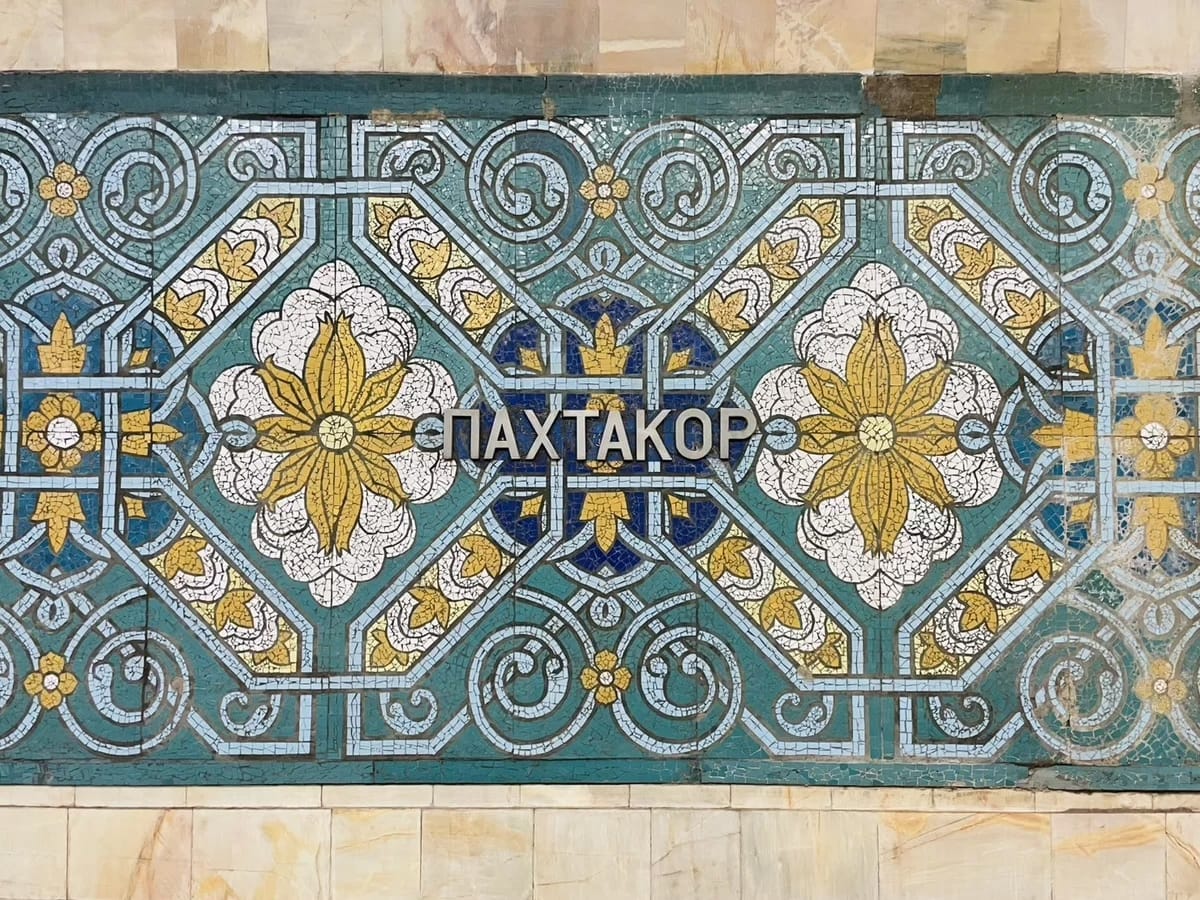
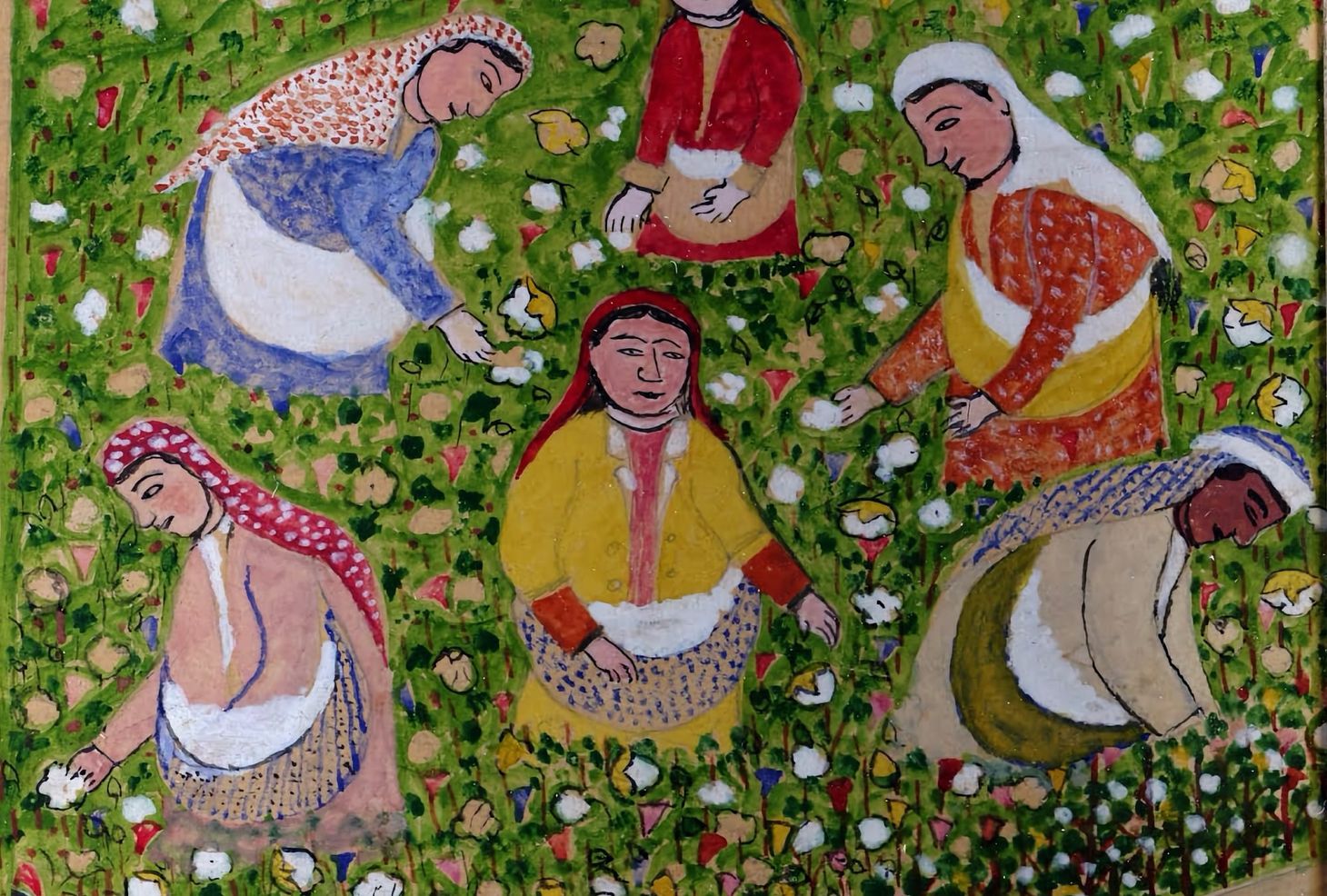
The mosaic’s colors and design grabbed me. I was curious about the white, cloud-like designs in the center of each octagon. After a little reading, I delightfully learned that Paxtakor means “cotton grower.” The metro station name is connected to Pakhtakor FC, one of Uzbekistan’s most successful football (soccer) clubs. The club was founded in 1956, when Uzbekistan was famous for its cotton production. Pakhtakor FC was the only Uzbek club to play in the Soviet Top League football leagues in the 1960s and 1970s. How did a football club known as the cotton growers become such an important symbol in Uzbekistan?
Uzbekistan’s (and Central Asia’s) connection to cotton production dates back thousands of years. It most likely spread to Central Asia via trade routes with South Asia. In the late nineteenth century, the Russians conquered Turkestan (western Central Asia) and transformed cotton production in the region. The Soviet Union continued this process. Central Asian cotton production is an excellent lens for teaching about late imperial Russian and Soviet colonialism.
Central Asia from Autonomy to Colony
This content is for Paid Members
Unlock full access to Liberating Narratives and see the entire library of members-only content.
SubscribeAlready have an account? Log in