The Changing Role of Government Involvement in the Economy in the 1930s
Teaching how states worldwide took a more active approach to directing economic development in the 1930s

I’m sharing this “short post” with all subscribers. Each week, I publish a short post focused on a specific topic from the AP Modern World History Course Description. I highlight one or two specific primary sources that students can analyze. Most of these posts are relevant to any modern world history course. This post started as a typical short post but expanded in length. If you want access to more short posts like this one, please consider upgrading your subscription.
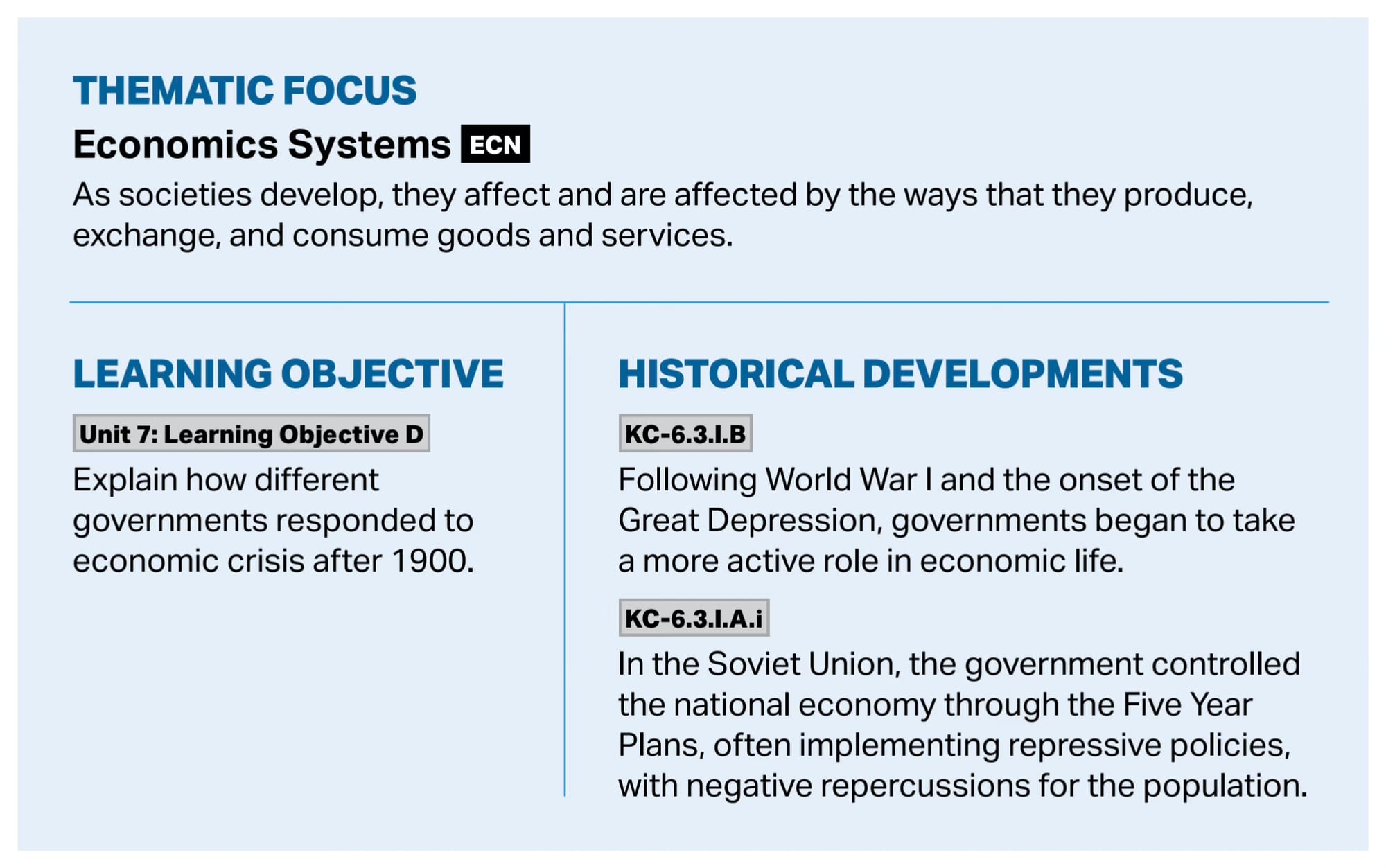
The 1930s were a difficult decade for people around the world. The Great Depression that began in the United States turned into a global depression. It was also a decade of competing global visions: liberal capitalism, communism, fascism, and anticolonialism. Despite these competing visions, governments around the world began to take a more hands-on approach to their economies. States had previously adopted tariffs and other measures to promote economic interests, but the 1930s were different. It didn’t matter what ideology the state’s leaders supported; they all became more involved in guiding and directing the economy.
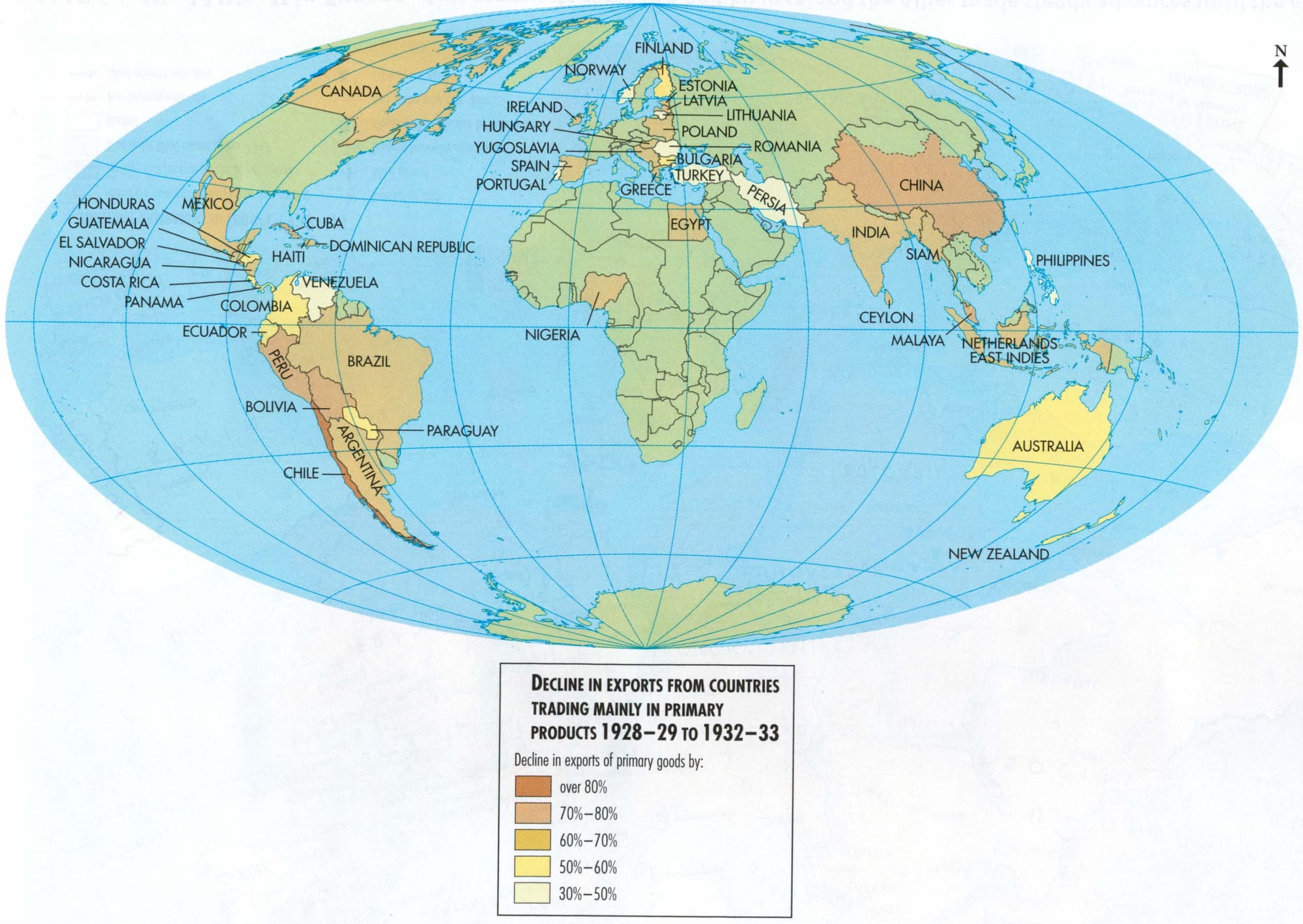
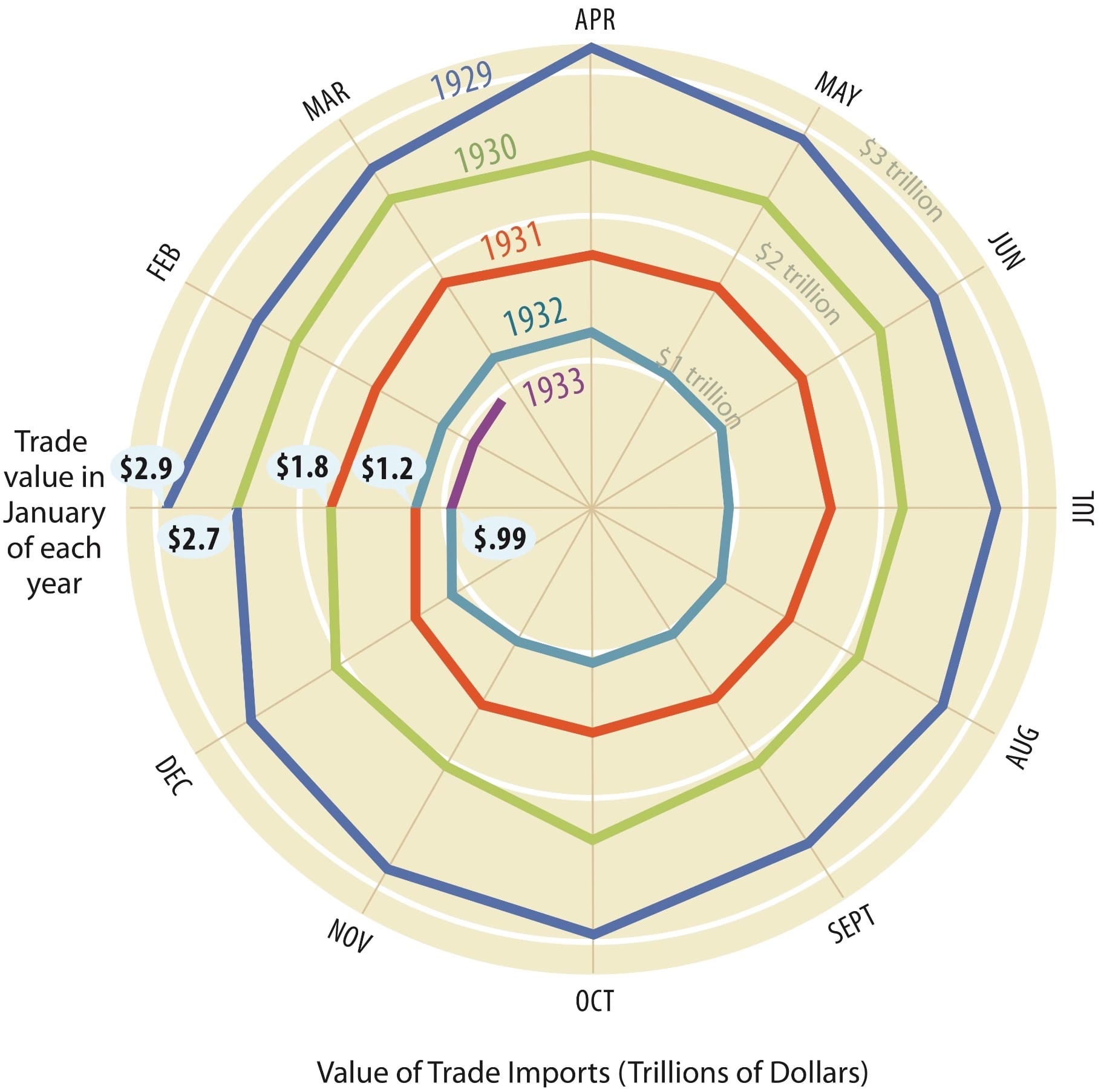
Left: Effect of the Depression on commodity-exporting countries from 1929 to 1933. Source: O’Brien’s Atlas of World History. Right: Contraction of Global Trade from 1929 to 1933.
Automobiles and Roads
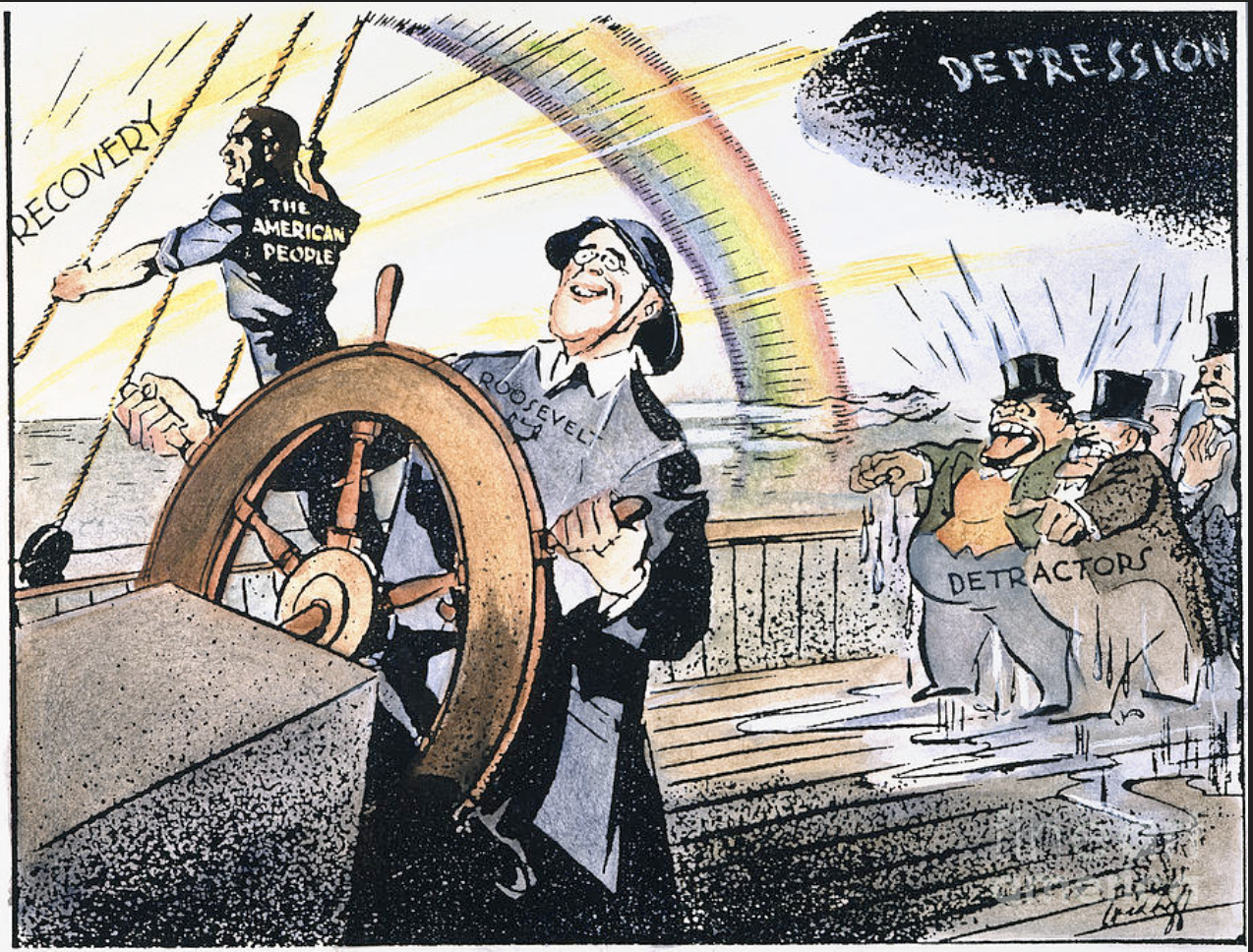
The 1934 cartoon at the beginning of this post shows President Roosevelt steering the American economy away from Depression to Recovery. It’s a useful cartoon for introducing this topic, since state leaders often put forth a vision for how their state’s economy should work.
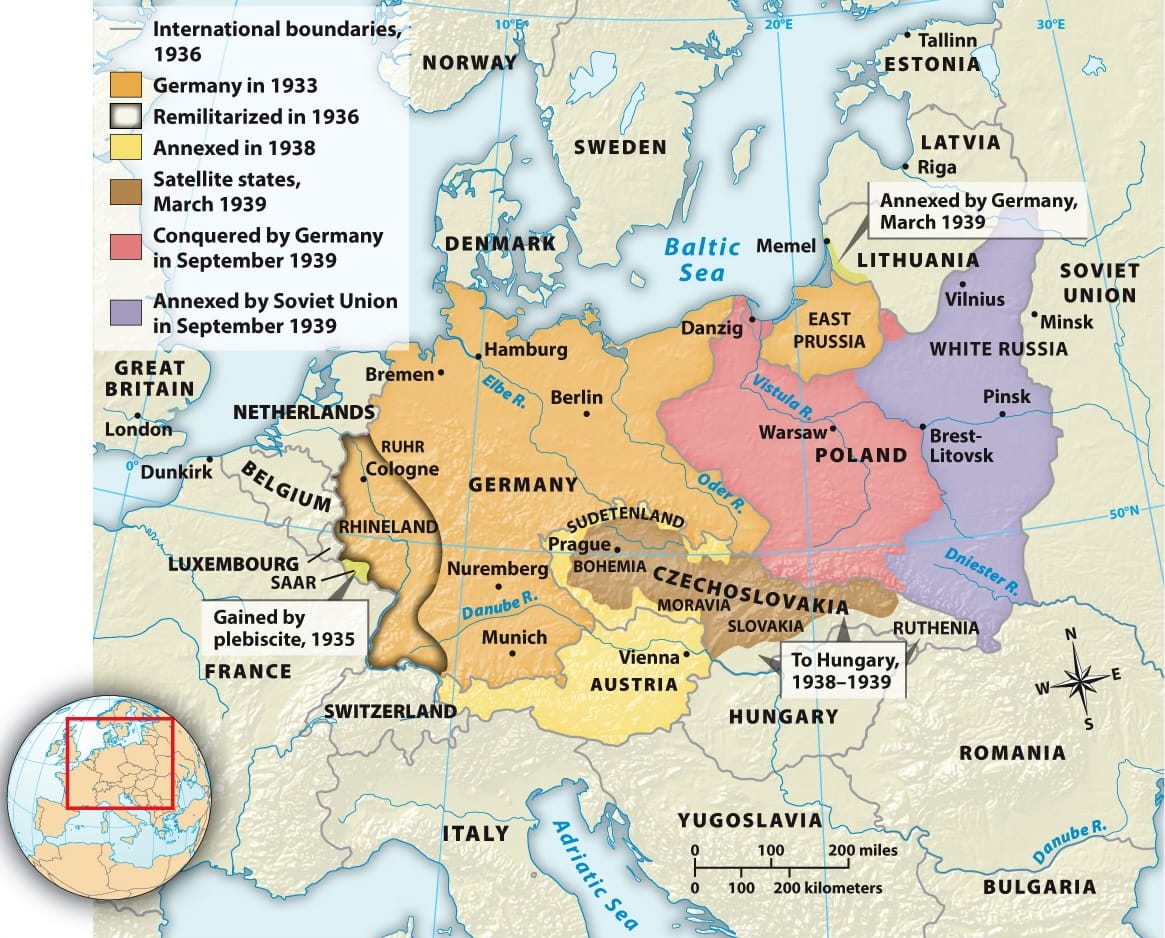
We can see a different vision of how leaders directed economies by exploring cars and roads in Hitler’s Germany. When Hitler became the Chancellor of Germany in 1933, he promoted the construction of the Reichs-Autobahnen (national highway system). In a speech on 30 January 1934, Hitler connected highway-building to economic recovery from the depression:
You cannot feed six and a half million unemployed by the Marxist practice of reciting fine theories; the only way is to create real jobs. And so in this first year we have already made our first general assault on unemployment… Useful work has been found for a third of the unemployed. We attacked this problem from all directions and this is what ensured our success…
Some of the measures which were introduced to achieve this goal will not be fully appreciated until the future. This applies particularly to our promotion of the motorization of the German transport system together with the construction of the national highway system (Reichs-Autobahnen). A solution was found for the old rivalry between the national railway system (Reichsbahn) and the automobile which will one day be of great benefit to the entire German People.
We realized that in order to kick-start the economy in this first year we would have to begin by providing basic types of employment, so that the resulting increase in purchasing power of the broad mass of the population would then gradually stimulate the production of more sophisticated goods.
As the Reichs-Autobahnen expanded, Hitler also promoted the production of more affordable cars so people could take advantage of the new roads. On 3 March 1934, in a speech at the opening of the German International Automobile Exhibition, Hitler challenged automobile manufacturers to build a more affordable car that more Germans could purchase and use on the new roads:
Therefore it is the will of the National Socialist political leadership to promote the automobile industry not only in order to stimulate the economy and give hundreds of thousands of people a way to make a living, but also to give an ever growing mass of our people the opportunity to acquire this most modern means of transportation…
If we really mean to increase the number of automobile owners in Germany into the millions, this can only be achieved if we adjust its price to the buying power of the millions-strong mass of buyers to be considered for this. If the German government wishes the German people to take an active interest in the automobile, the economy has to create and build a suitable automobile for the German people…
I would like to suggest that the most important task for the German automobile industry is to increasingly move towards designing the car that will inevitably give it access to millions of new buyers. For only if we succeed in winning over the broadest mass for this new means of transportation will its usefulness not only for our national economy but also for our society be indisputable.
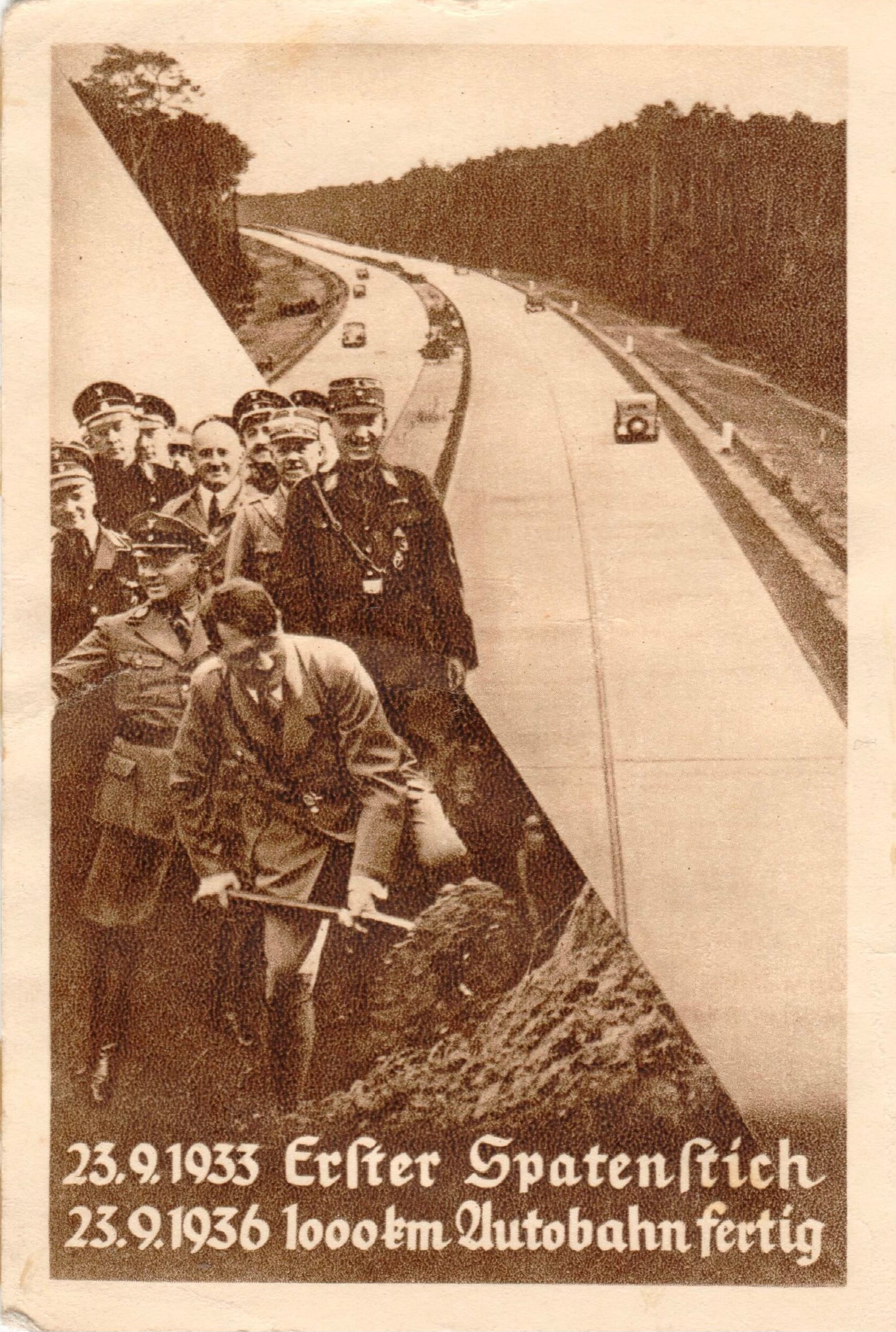
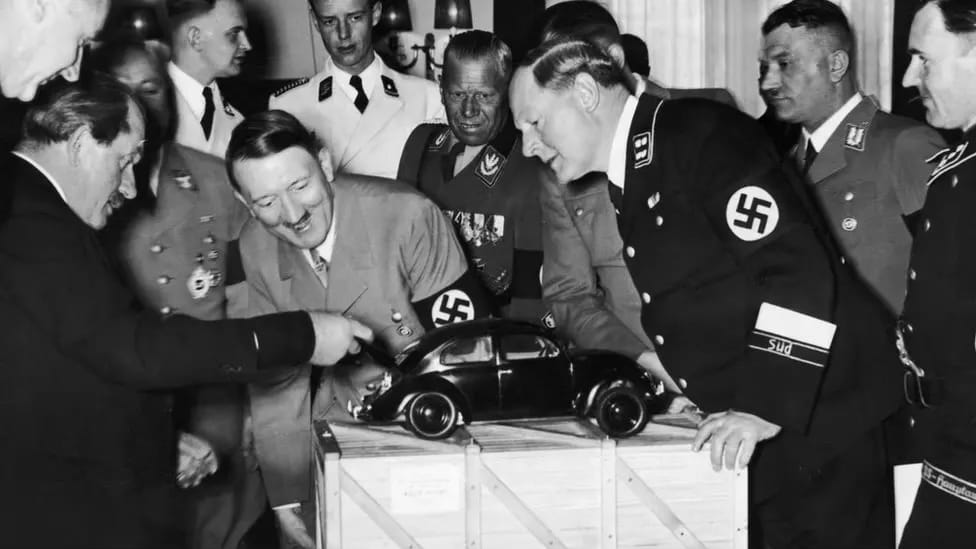
Left: Part of a German postcard from the 1930s showing Hitler beginning construction of the Reichs-Autobahnen. Source: Wikimedia Commons. Right: Ferdinand Porsche (left) showing Adolf Hitler the model of his Volkswagen Beetle. Source: BBC.
Shortly after his speech in Berlin, Hitler awarded Ferdinand Porsche a contract to develop a low-cost automobile that more Germans could afford. Porsche designed the Volkswagen (the People’s Car). Although Porsche designed the car before the Second World War, Volkswagen did not begin mass-producing it until 1945. When students see the combination of Hitler’s speeches on the national highway system and automobile manufacturing, they can quickly see how governments began to shape national economies more actively.