“Their Liberty Will Form a Parallel to the History of Europe”: Teaching West Africa in the Age of Revolutions
Discussion of teaching West Africa as part of the Age of the Revolutions

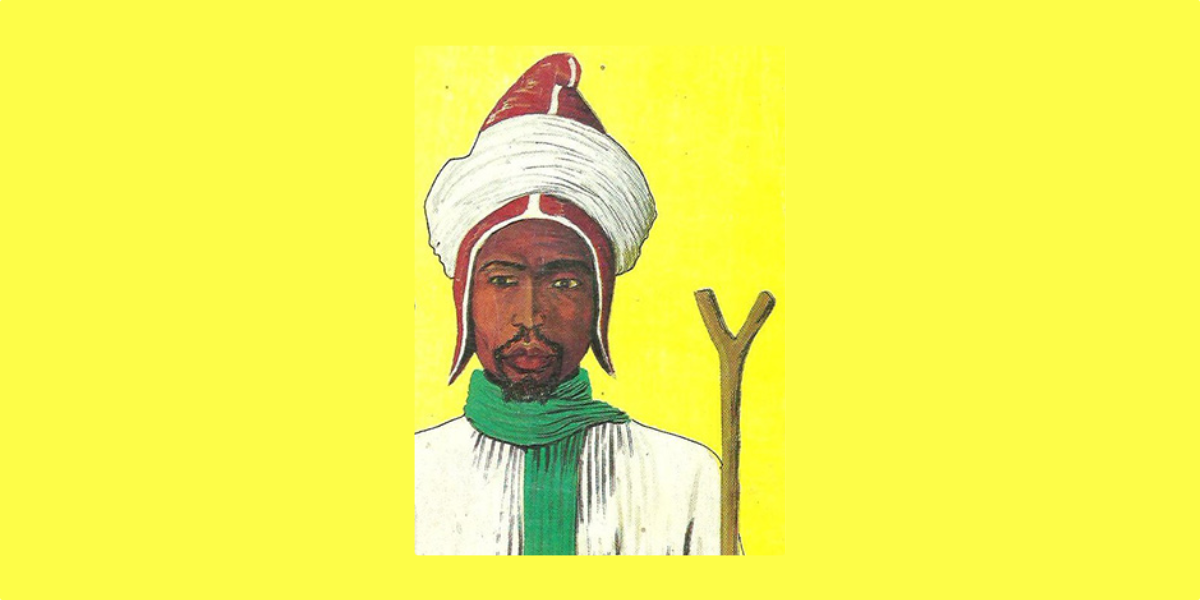
Open most world history textbooks and look at the chapters after the Atlantic Revolutions. There is often a section about changes in other parts of the world. It might discuss what is happening in the Pacific, Africa south of the Sahara, or parts of Asia. Here, we’ll often find a brief mention of Islamic Revitalization in Africa and the role of jihad in Africa. Look at the dates for these events in West Africa. They occurred in the late eighteenth and early nineteenth centuries - the same period as the Atlantic Revolutions. Despite being in West Africa, part of the Atlantic world on most maps, the uprisings in West Africa are often seen as distinct from the Atlantic Revolutions.
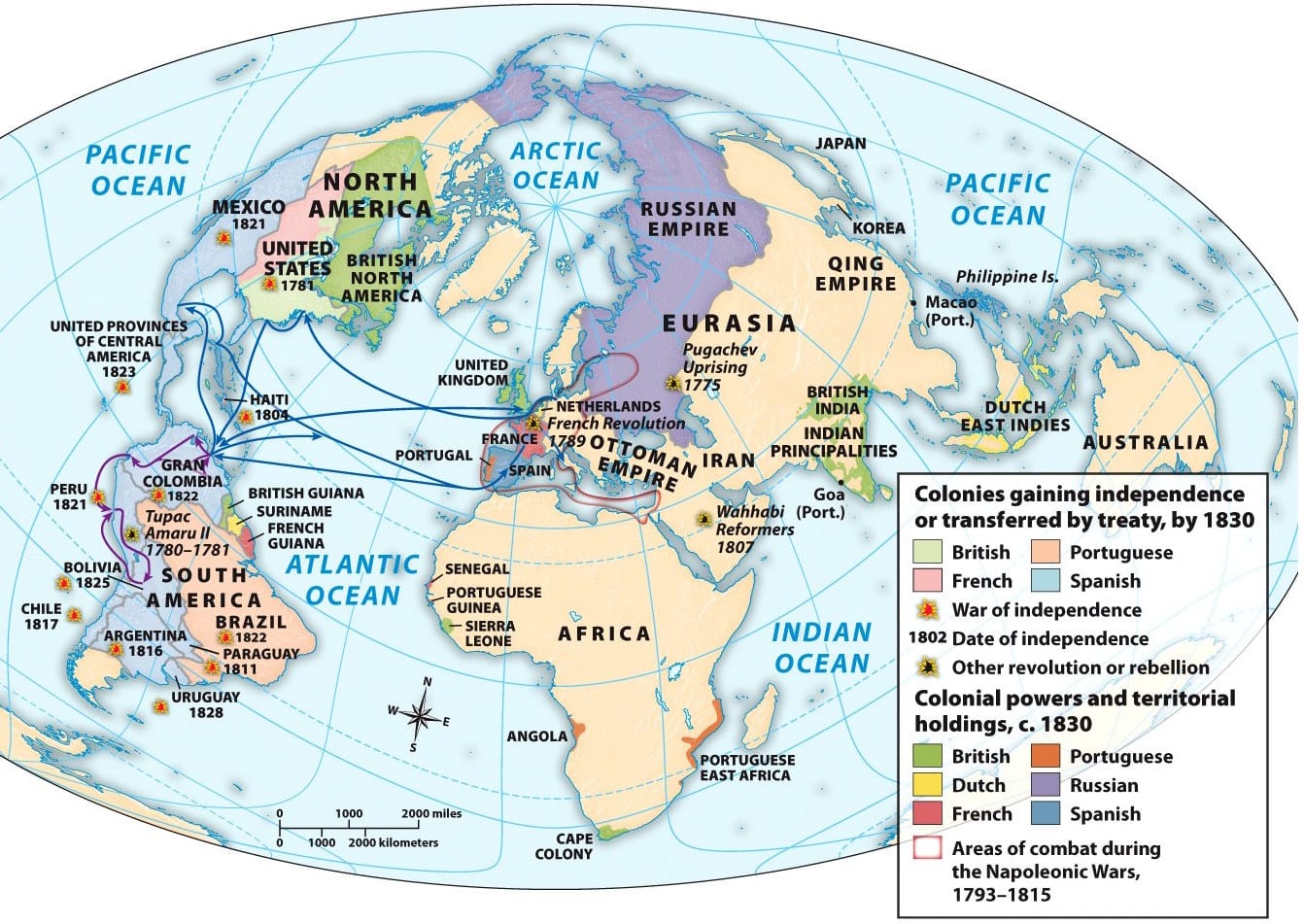
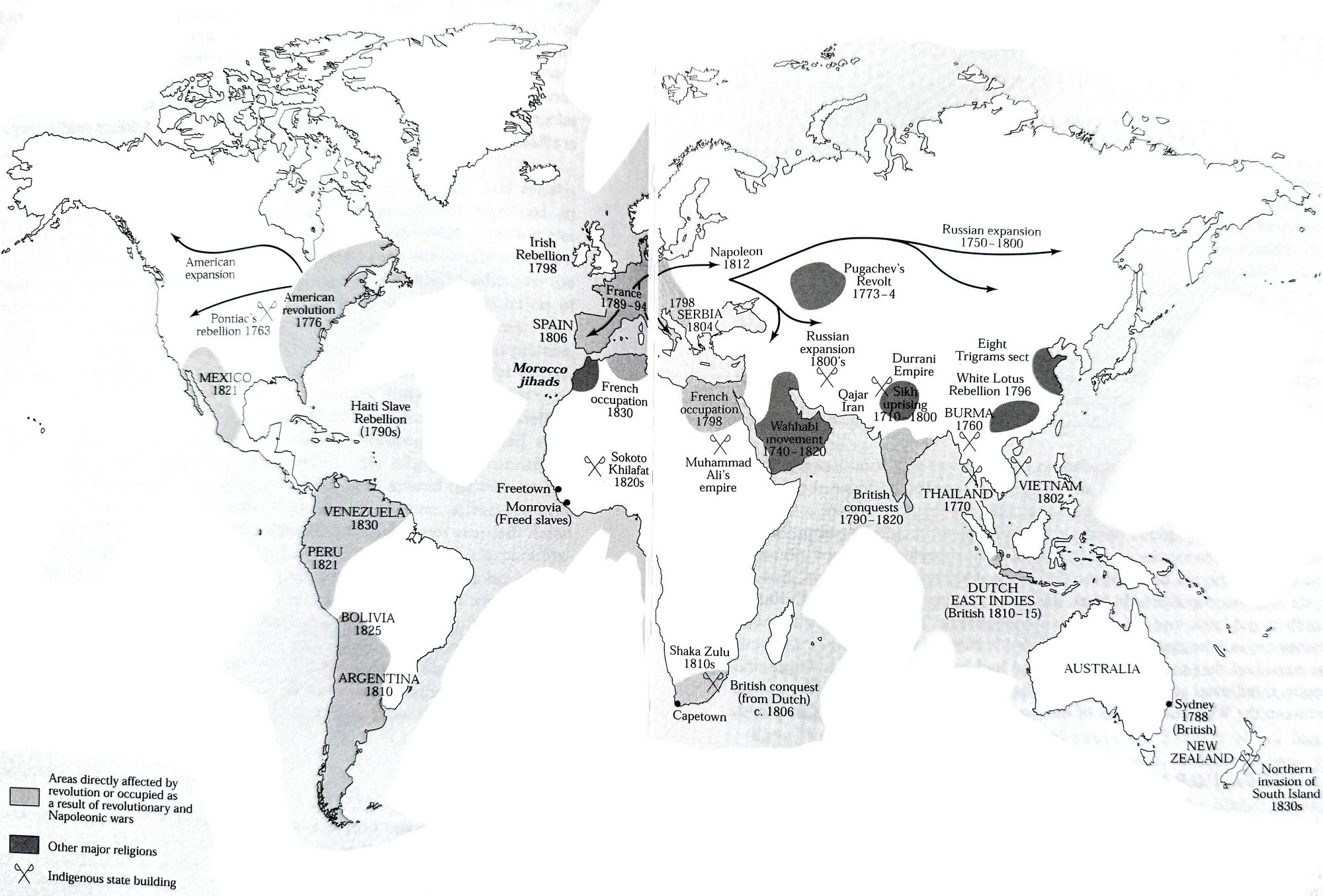
Most maps showing the Atlantic Revolutions don’t include the West African jihads. The map from Bayly’s The Birth of the Modern World is an exception, mentioning the Sokoto Caliphate. Left: Revolutions and Imperialism, c. 1780 - c.1830. Source: A History of World Societies. Right: “Revolutions and Imperialism, c.1780 - 1830.” Source: Bayly’s The Birth of the Modern World.
Looking more closely at these West African uprisings, we’ll notice disagreements over taxation, slavery, and how governments ought to operate - many of the same issues we associate with the Atlantic Revolutions - were among the causes. The significant difference was Enlightenment ideals inspired and guided the Atlantic Revolutions, but Islam supposedly inspired and guided these jihads. How much should a single ideology define any event? Should we not consider context? How do we want to define the Age of Revolutions? Were Enlightenment ideals crucial, or could other ideologies influence the revolutions? Should we accept that an uprising by enslaved Africans in Haiti was part of the Atlantic Revolutions, but uprisings by enslaved Africans in West Africa were something different?
There are a lot of questions there, but they are important to ask. Recent scholarship has challenged the narrow understanding of the Atlantic Revolutions, and other scholars have argued for reconsidering how we interpret the West African Islamic uprisings. In this post, I will discuss how we can introduce this scholarship to our students and West African primary sources that students can analyze and discuss this issue for themselves.
Integrating West Africa into the Age of Revolutions
This content is for Paid Members
Unlock full access to Liberating Narratives and see the entire library of members-only content.
SubscribeAlready have an account? Log in