“On Arrival at the Market with their Grain”: Grain and Mass Production in Late Imperial Russia
Rethinking how we teach late imperial Russia’s economic changes

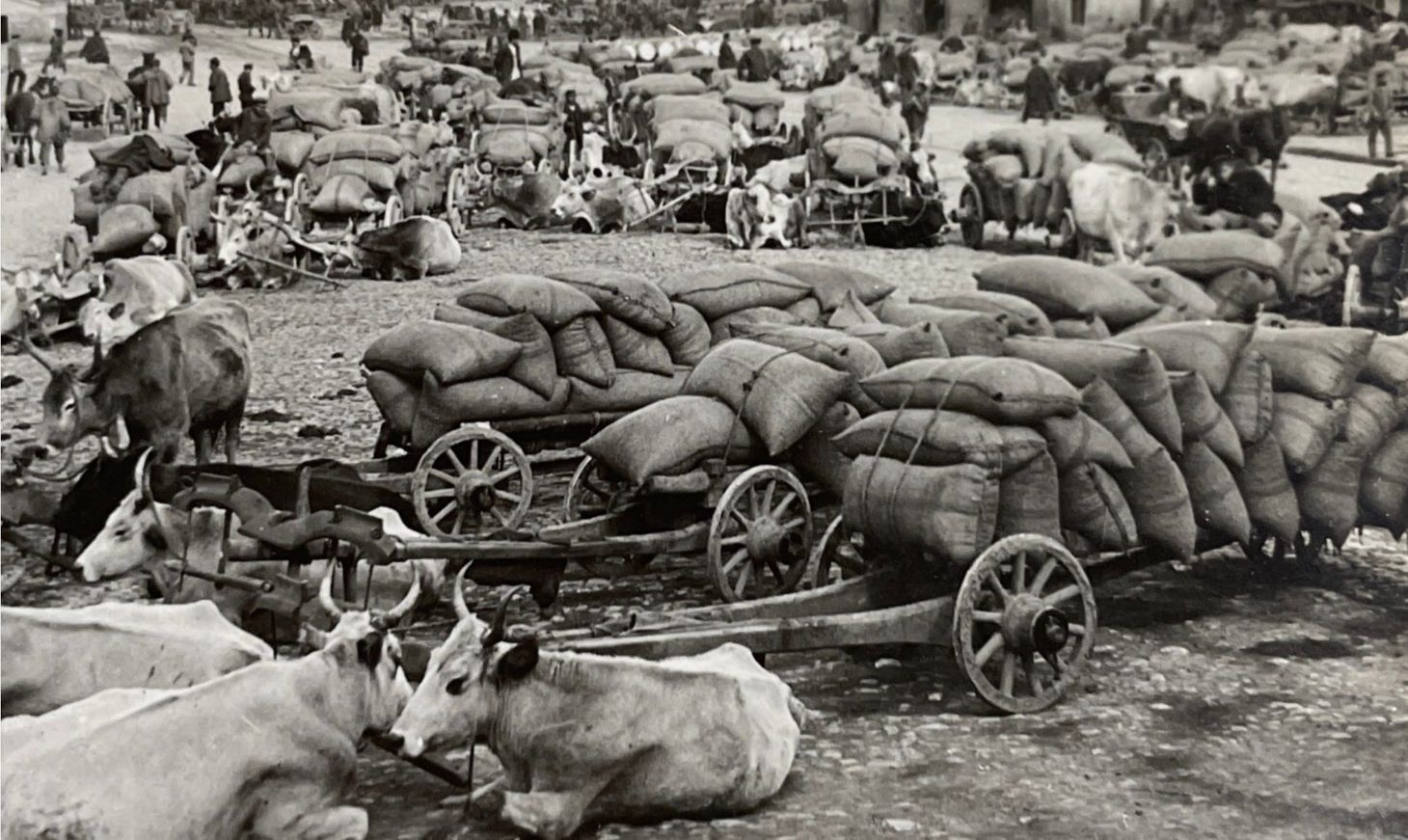
I previously wrote about visiting Jonava, the small town in Lithuania, where my great-grandmother and her family emigrated from. When they left around 1900, Lithuania was part of the Russian Empire. Although my family wouldn’t have known it, Jonava was becoming integrated into the global economy. My great-grandmother’s children mentioned the “village” the family left behind. When I visited the town in 2017 and began looking at old pictures, I immediately recognized all the signs of how Jonava was undergoing an economic transformation.
In that post, I also discussed why we should adopt an asset-based approach to teaching the nineteenth-century global economy. Too often, we have students learn why some places industrialized and why others didn’t (e.g., why did Japan industrialize and Egypt didn’t?). This approach encourages students to think about industrialization in terms of successes and failures. Rather than focusing primarily on industrialization, we should focus more on helping students understand how regions worldwide changed economically and how those changes contributed to the development of the modern world.
I described this shift in approach as moving away from a strict focus on the Industrial Revolution to the “Production Revolution.” Farmers and workers around the world were changing how they worked in the nineteenth century. People increasingly moved away from self-sufficiency to mass production of a single item and more engagement with the global economy. This shift can be seen in the Russian Empire. By focusing on Russian railways, the expansion of Russia’s grain exports, and the role of Odessa, we can see how Russians were undergoing a production revolution that totally transformed how they lived and influenced the development of the modern world.
How Most Textbooks Portray Late Imperial Russia’s Economy
World history textbook authors often discuss Russian industrialization as part of the “Great Reforms” introduced by Tsar Alexander II in the 1860s. He introduced these reforms after Russia had lost the Crimean War. The reforms not only included the beginning of Russian industrialization, but also the emancipation of Russian serfs, changes to the education and judicial systems, and restructuring the Russian army. When textbooks address the economic shifts, authors focus on how Russian industrialization was similar to and different from Western European industrialization. For example, in Traditions and Encounters, the authors clearly compare Russia to Western Europe:
Social and political reform coincided with industrialization in nineteenth-century Russia. Tsar Alexander II emancipated the serfs partly with the intention of creating a mobile labor force for emerging industries, and the tsarist government encouraged industrialization as a way of strengthening the Russian Empire. Thus, although Russian industrialization took place within a framework of capitalism, it differed from western European industrialization in that the motivation for development was political and military and the driving force was government policy rather than entrepreneurial initiative. Industrialization proceeded slowly at first, but it surged during the last two decades of the nineteenth century.
The prime mover behind Russian industrialization was Count Sergei Witte, minister of finance from 1892 to 1903… Witte implemented policies designed to stimulate economic development. The centerpiece of his industrial policy was an ambitious program of railway construction, which linked the far-flung regions of the Russian Empire and also stimulated the development of other industries.
Even when acknowledging the progress of Russian industrialization, authors understand the changes in terms of how they compare to Western Europe. In Ways of the World, Strayer points out Russian economic changes, but qualifies them in comparison to Europe:
By the 1890s, Russia’s Industrial Revolution was launched and growing rapidly. It focused particularly on railroads and heavy industry and was fueled by a substantial amount of foreign investment. By 1900, Russia ranked fourth in the world in steel production and had major industries in coal, textiles, and oil. Its industrial enterprises, still modest in comparison to those of Europe, were concentrated in a few major cities — Moscow, St. Petersburg, and Kiev, for example — and took place in factories far larger than in most of Western Europe.
The subtext of these descriptions of Russian industrialization is that while Russia was industrializing in the late nineteenth century, it still lagged behind Western Europe. As I’ve written previously, when we compare one country’s industrialization program to the earlier models of Western Europe, we are assuming that the Western European model was the “right” way to industrialize. Countries such as Russia and Japan either copied the model correctly, or they “failed.” When students learn about late nineteenth-century Russian industrialization, they understand it as unsuccessful.
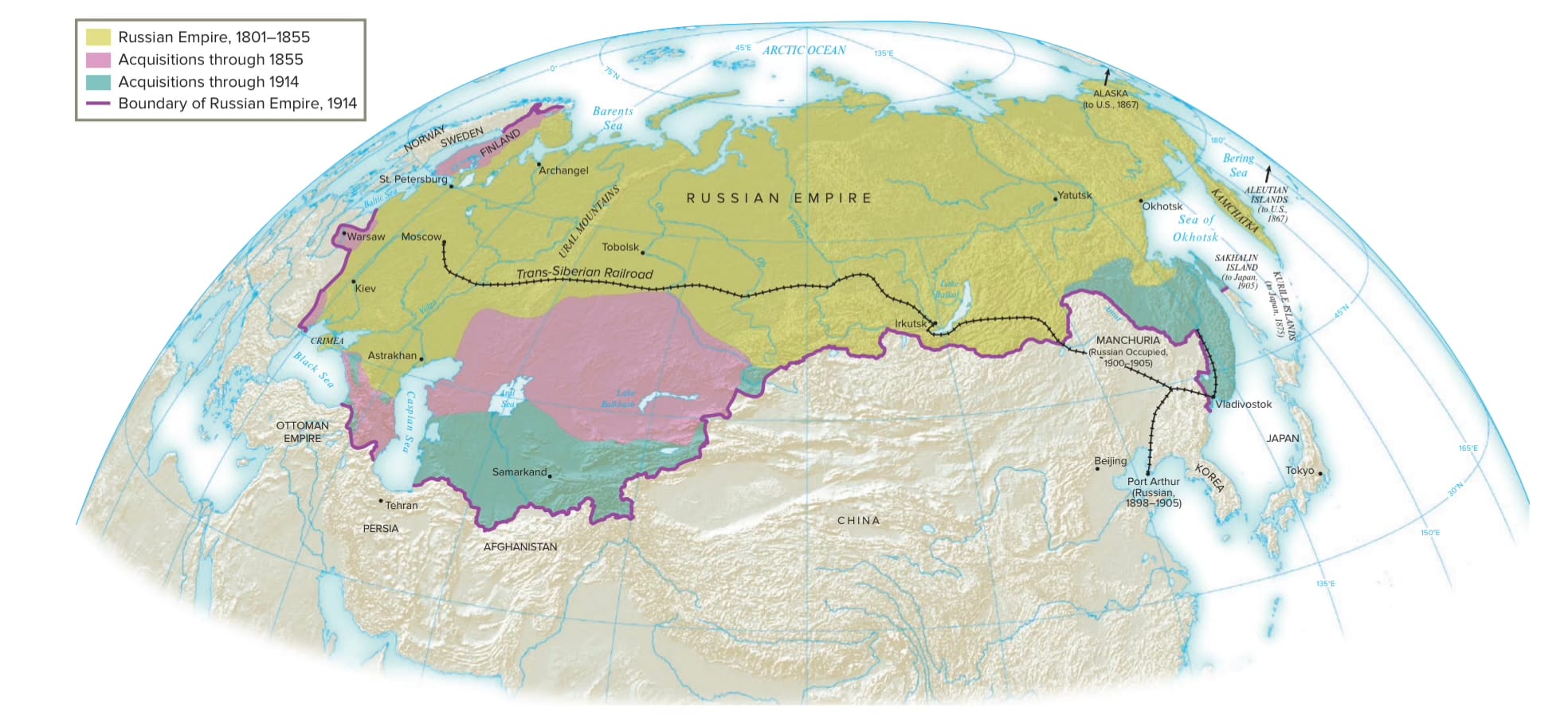
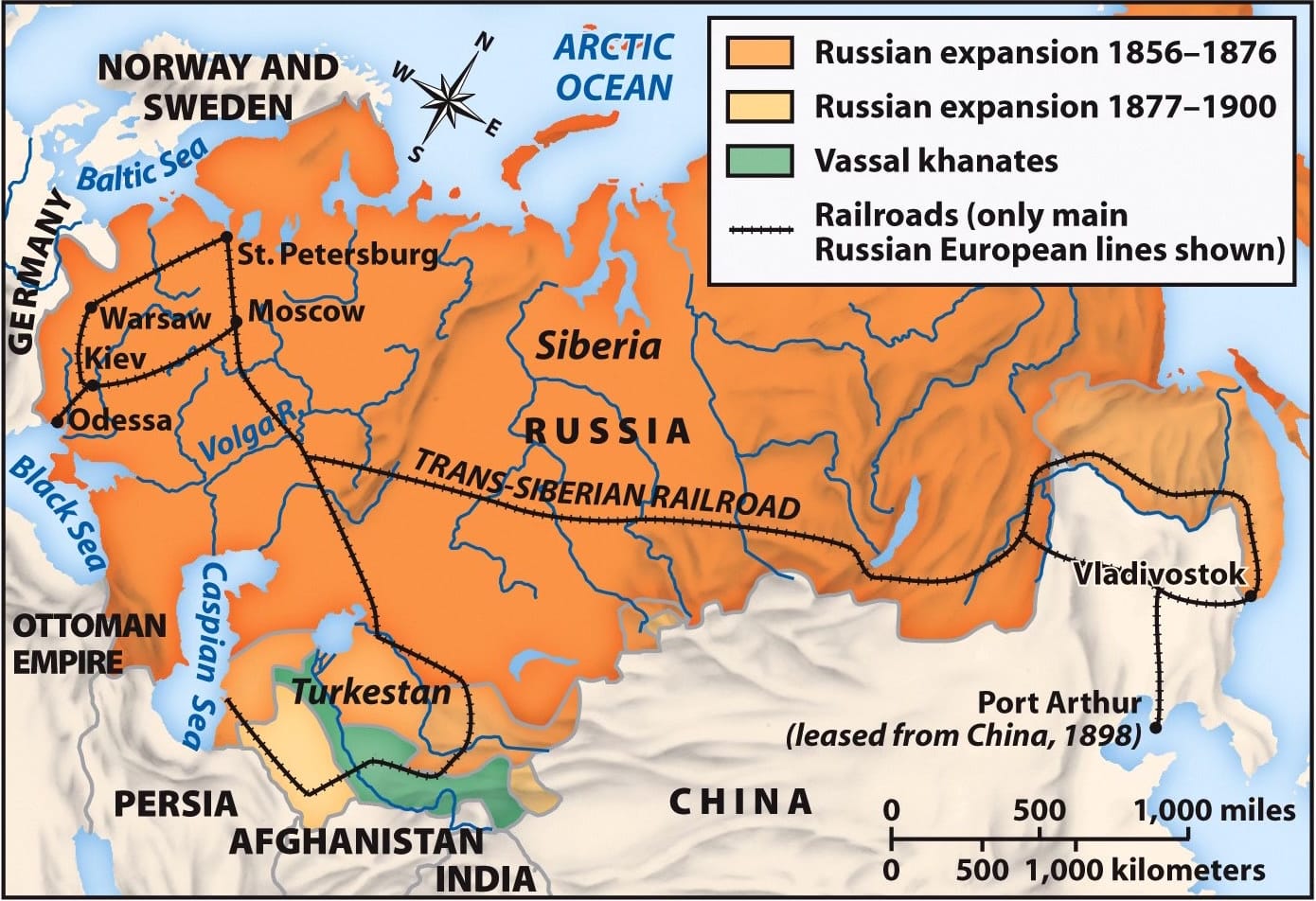
Left: Late Imperial Russia in Traditions & Encounters. Right: Late Imperial Russia in A History of World Societies.
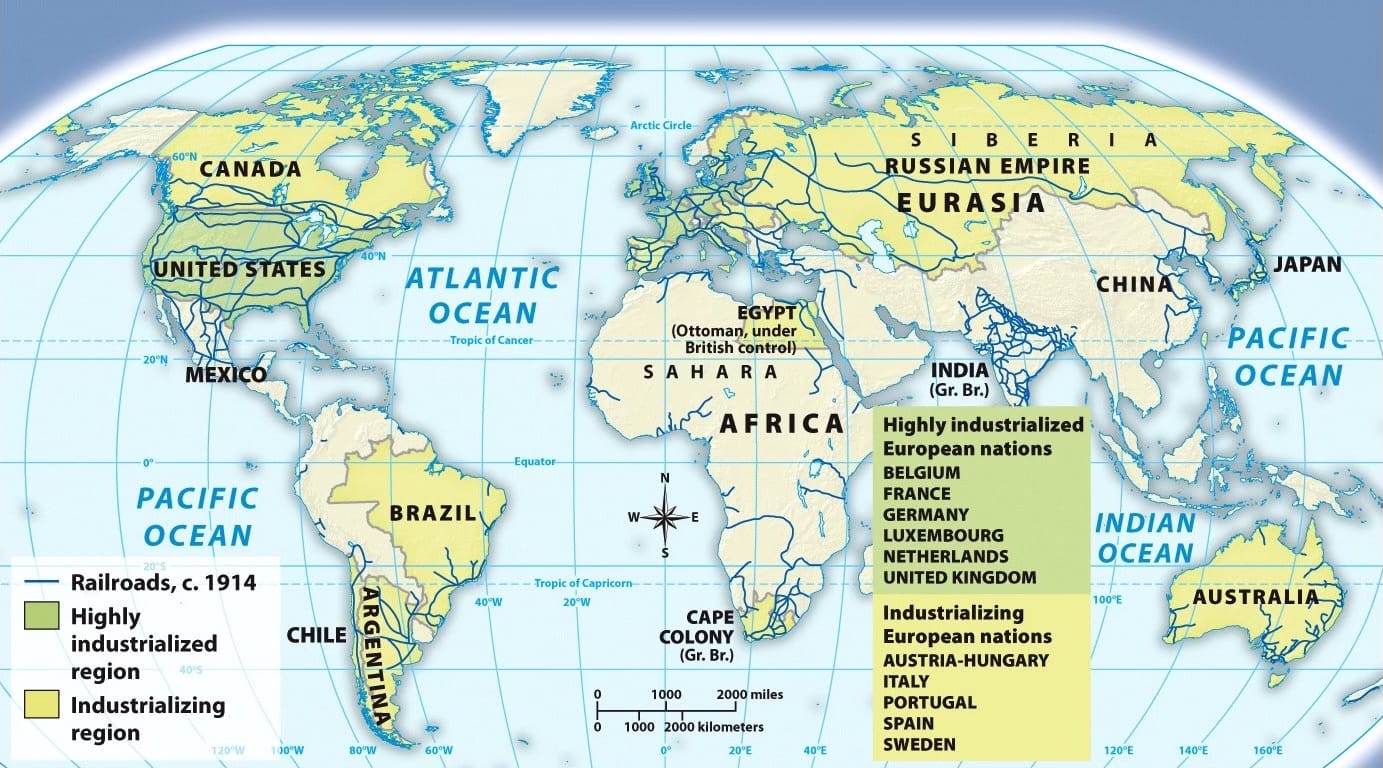
Both excerpts also mention the importance of railway building. Textbooks typically include maps of late imperial Russia, such as the ones above. These maps always show the Trans-Siberian railway, but they often don’t show other railroads in Russia. The one from A History of World Societies is the only map of late imperial Russia in a textbook that includes a few of the other railways. Despite emphasizing the importance of railways in Russia, students don’t get a visual sense of railroad construction.
The Growth of the Russian Railway Network
This content is for Paid Members
Unlock full access to Liberating Narratives and see the entire library of members-only content.
SubscribeAlready have an account? Log in