
Narrating the Global History of Lisbon
Lisbon is more than a European city; it’s also an African and Asian city

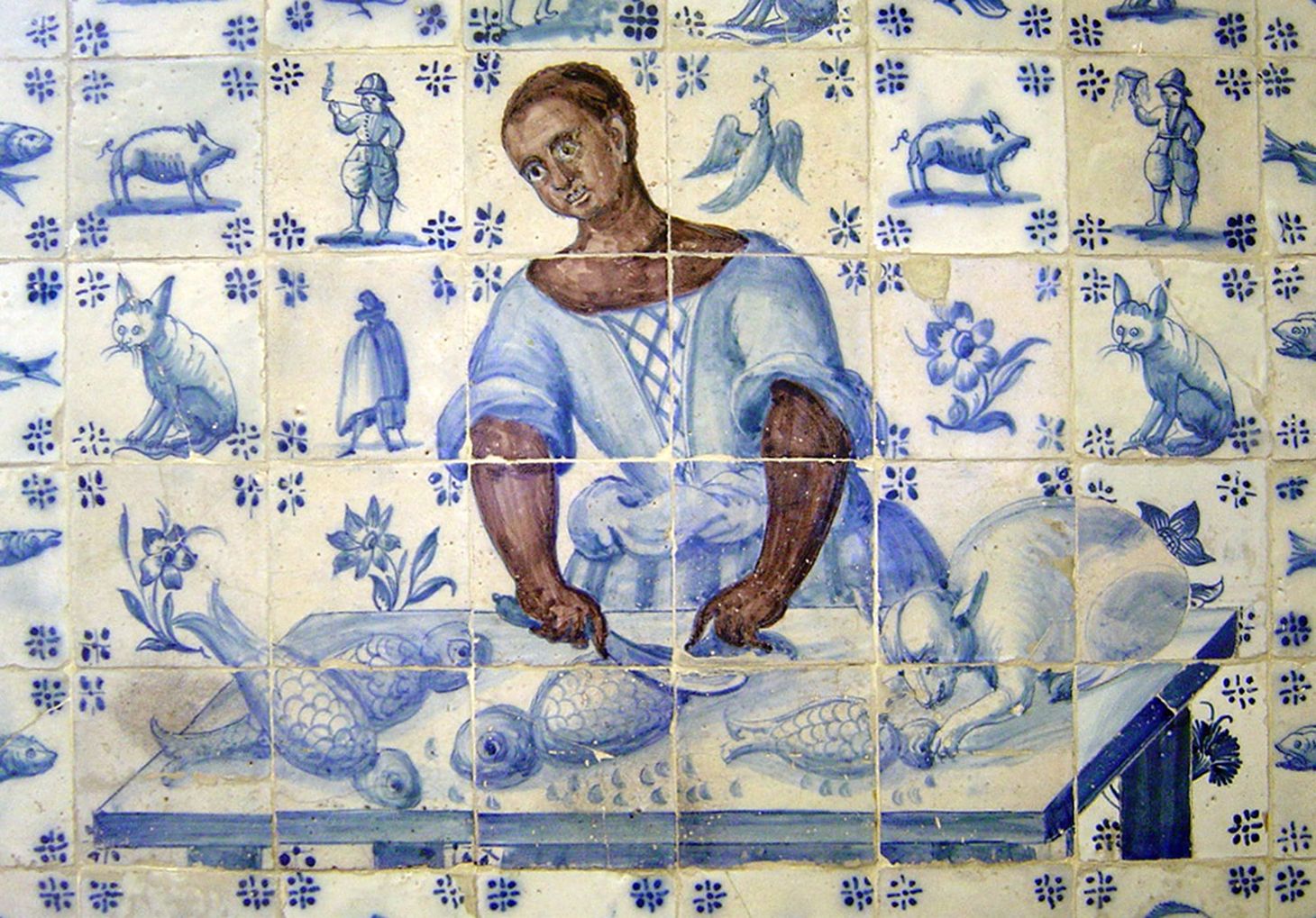
Table of Contents
Lisbon is a beautiful city. I just returned from my third visit. It’s easy to fall in love with its Enlightenment-inspired downtown, its famed “seven hills” (which most visitors don’t realize are meant to highlight connections to Rome), and monuments to Portuguese voyages of “discovery.” Guides in Lisbon love to emphasize these aspects of the city.
But what I’ve come to love about Lisbon is its cosmopolitanism. Lisbon is more than a European city; it’s increasingly a global city. I’m not talking about the surprising number of Americans who have moved to Portugal. It’s the African and Asian connections and community that are all over Lisbon, but, unfortunately, easy for visitors to ignore. For world history teachers, Lisbon is an excellent city for showing the historical and present-day legacies of globalization.
Lisbon’s South Asian Community
Portugal was the first European state to establish a colonial presence in South Asia. The Portuguese presence in Goa began in 1510 and lasted until 1961, but there are few Goans in Lisbon today. Bangladeshis, Bengalis, Nepalis, and Pakistanis have all established large communities in Lisbon. Around the corner from our Airbnb in Alfama (Lisbon’s oldest neighborhood) was a small park. I spent an afternoon playing there with my daughter and chatting with Nepali and Bangladeshi moms who instantly recognized Jaya’s “Indian” name. Nepalis delighted in my Indian-inspired tattoos as they served me delicious gelato. I talked about visiting Punjab with one of our drivers, who was a Sikh from Amritsar. Everywhere I turned in Lisbon, I kept having delightful conversations with South Asians.
Portugal’s colonization of Goa may have ended in 1961, but the South Asian connection is strong today. The video above is an excellent resource for helping students visualize how South Asians are shaping Lisbon and teaching about contemporary migration patterns. The unfortunate side effect for the South Asian community is that right-wing politicians have begun targeting South Asians and blaming them for Portugal’s economic problems. We can also use these resources to compare migration to the United States.
Lisbon’s African Community
In Born in Blackness: Africa, Africans, and the Making of the Modern World, 1471 to the Second World, Howard French discusses the centrality of Africa to the development of modernity. He emphasizes the importance of Portugal’s colonization of Africa and its role in the transatlantic slave trade. Portugal enslaved and traded more Africans than any other European state. For most world historians, Portugal’s relationship with Africa isn’t news. Visitors to Lisbon, however, are less likely to learn about how Africa and Africans have shaped the city.
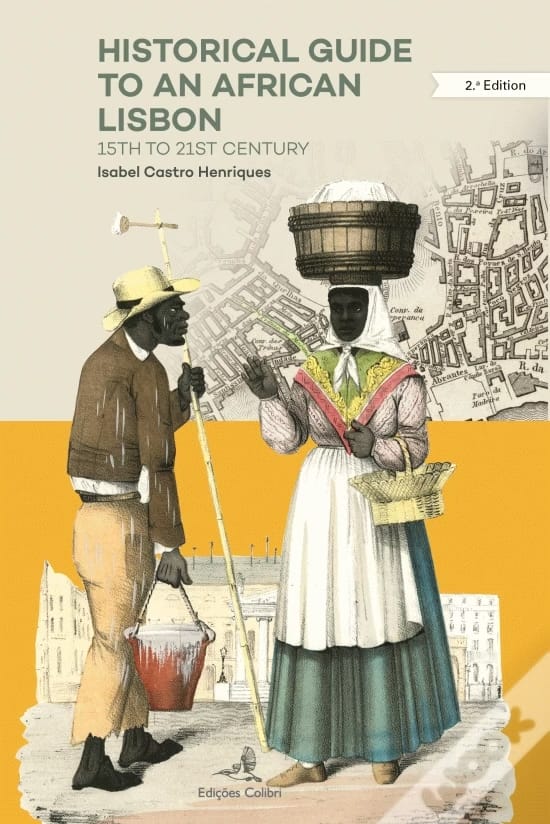
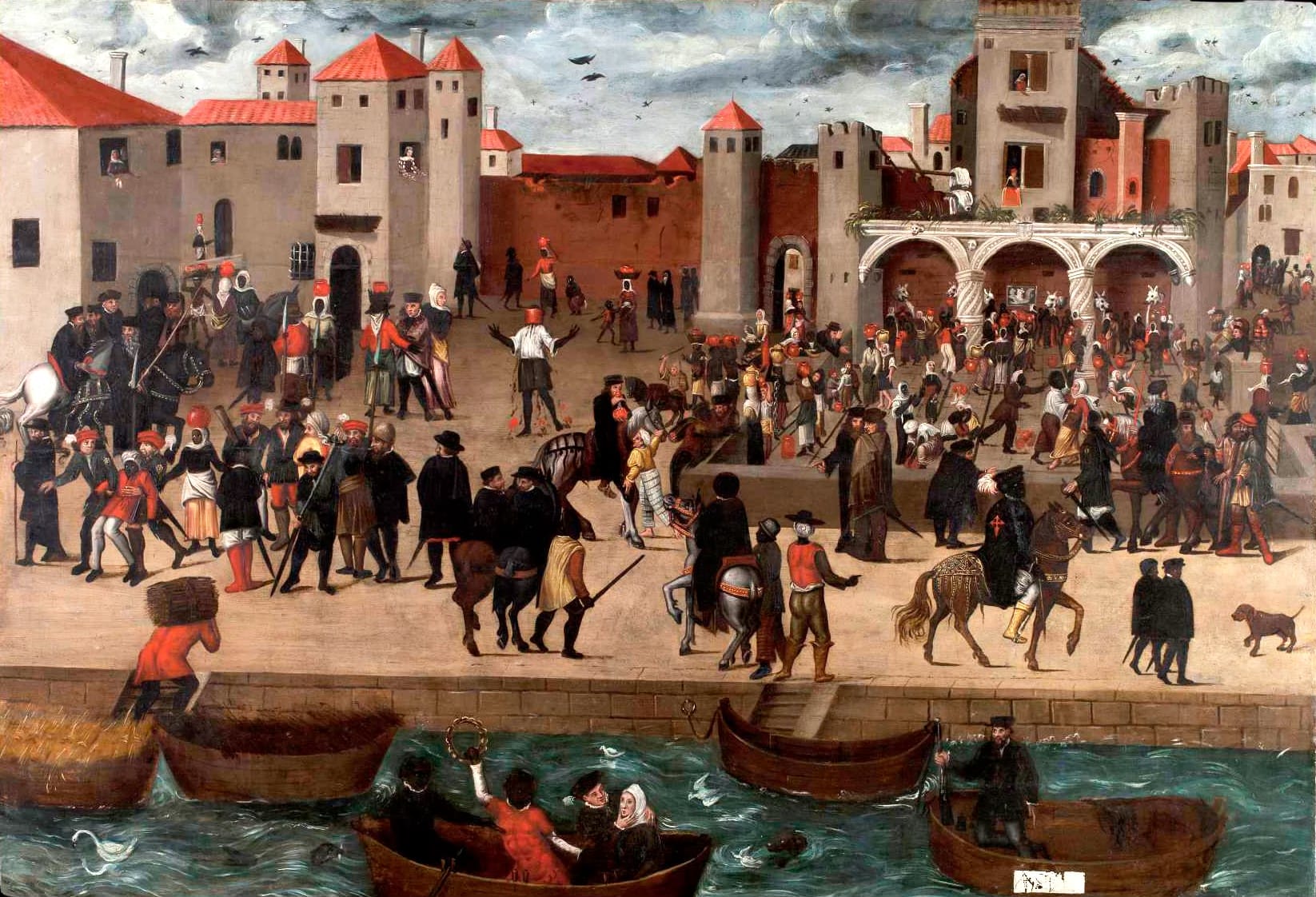
Left: Isabel Castro Henriques’ Historical Guide to an African Lisbon: 15th to 21st Century. Right: Chafariz d’el Rei. Source: Wikimedia Commons.
On my recent trip, I picked up an English translation of Isabel Castro Henriques’ Historical Guide to an African Lisbon: 15th to 21st Century. The book doesn’t seem to be available in the United States, but can be ordered from European booksellers. It’s the ideal resource for teachers. Henriques discusses the African influences on different Lisbon neighborhoods and includes many visual resources. I wish I had had the book ten years ago when I wrote about two sixteenth-century paintings of Lisbon. These paintings clearly show the significant African community in Lisbon.
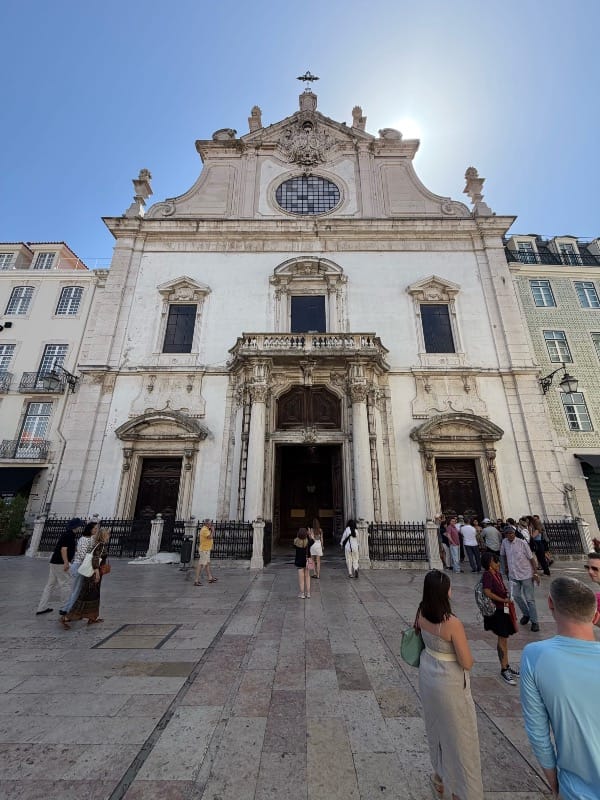
I’ve been on a few walking tours of Lisbon. All the guides have stopped in Largo de São Domingos. The church dates back to the thirteenth century, and the square has a lot of history. But, like David Ridley’s article about the square, most guides focus only on some of its history. On a recent tour, the guide easily spent thirty minutes talking about the persecution of Jews in the square during the sixteenth century, but never discussed the African history of the square.
I only learned about the African history of the square by going on Naky Gaglo’s excellent African Lisbon Tour. Naky was born in Togo and moved to Lisbon after living in Germany. While learning how to be a tour guide in Lisbon, he realized that guides weren’t discussing Lisbon’s African history. Instead of trying to squeeze in a few details here and there on a typical tour, he created his own tour that thoroughly explores Portugal’s involvement in the transatlantic slave trade, African colonization, and the African community in Portugal today.
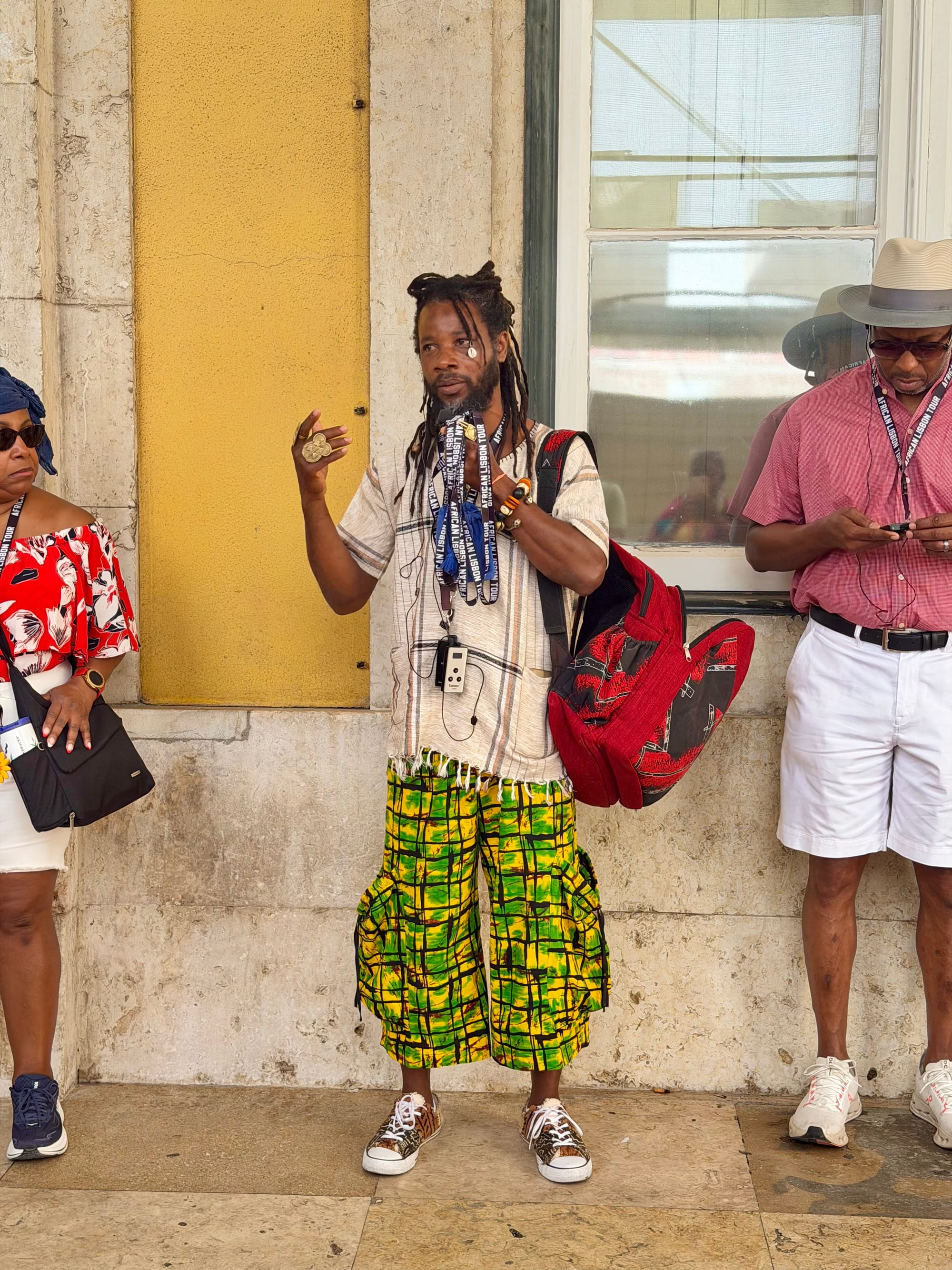
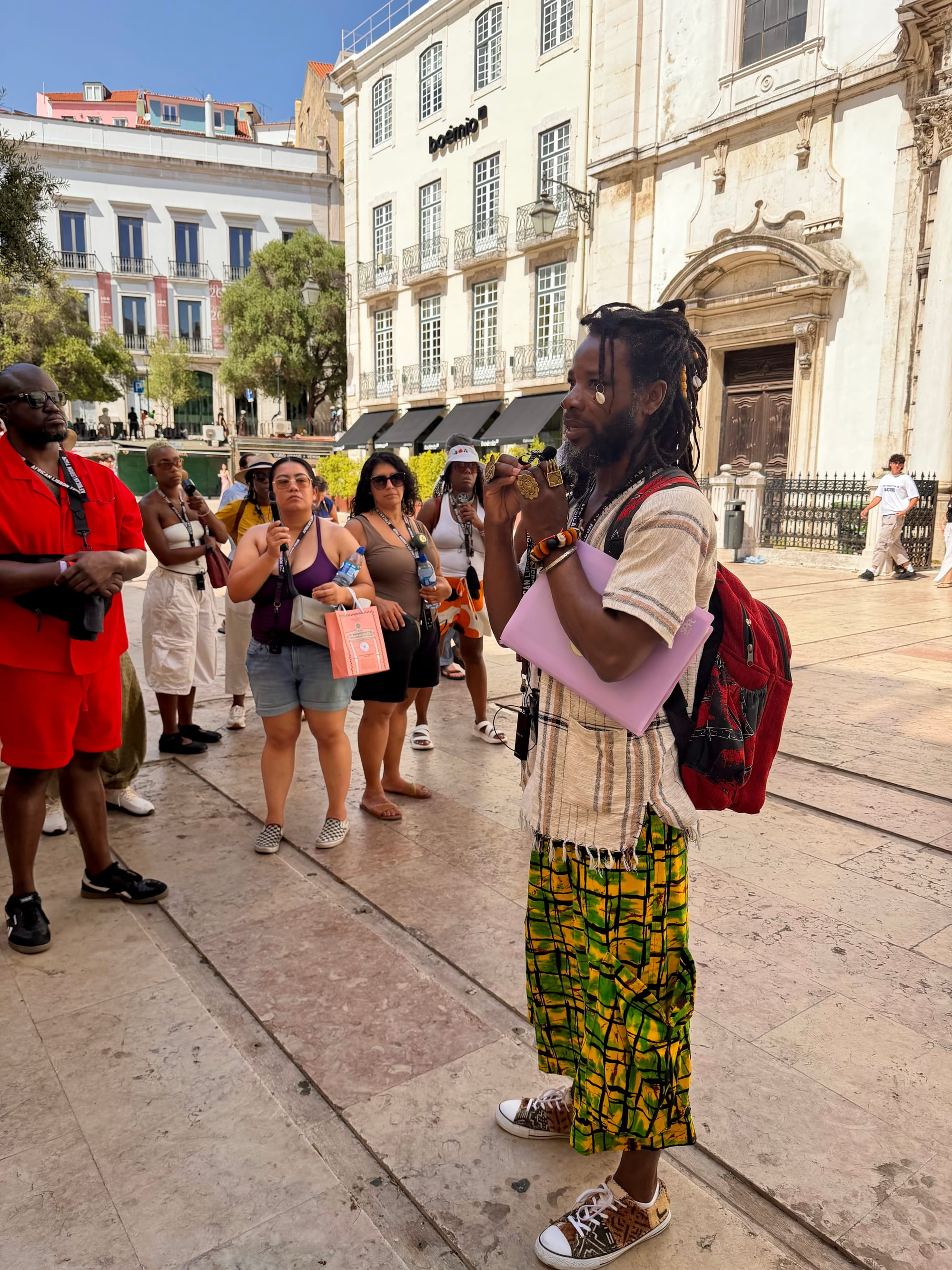
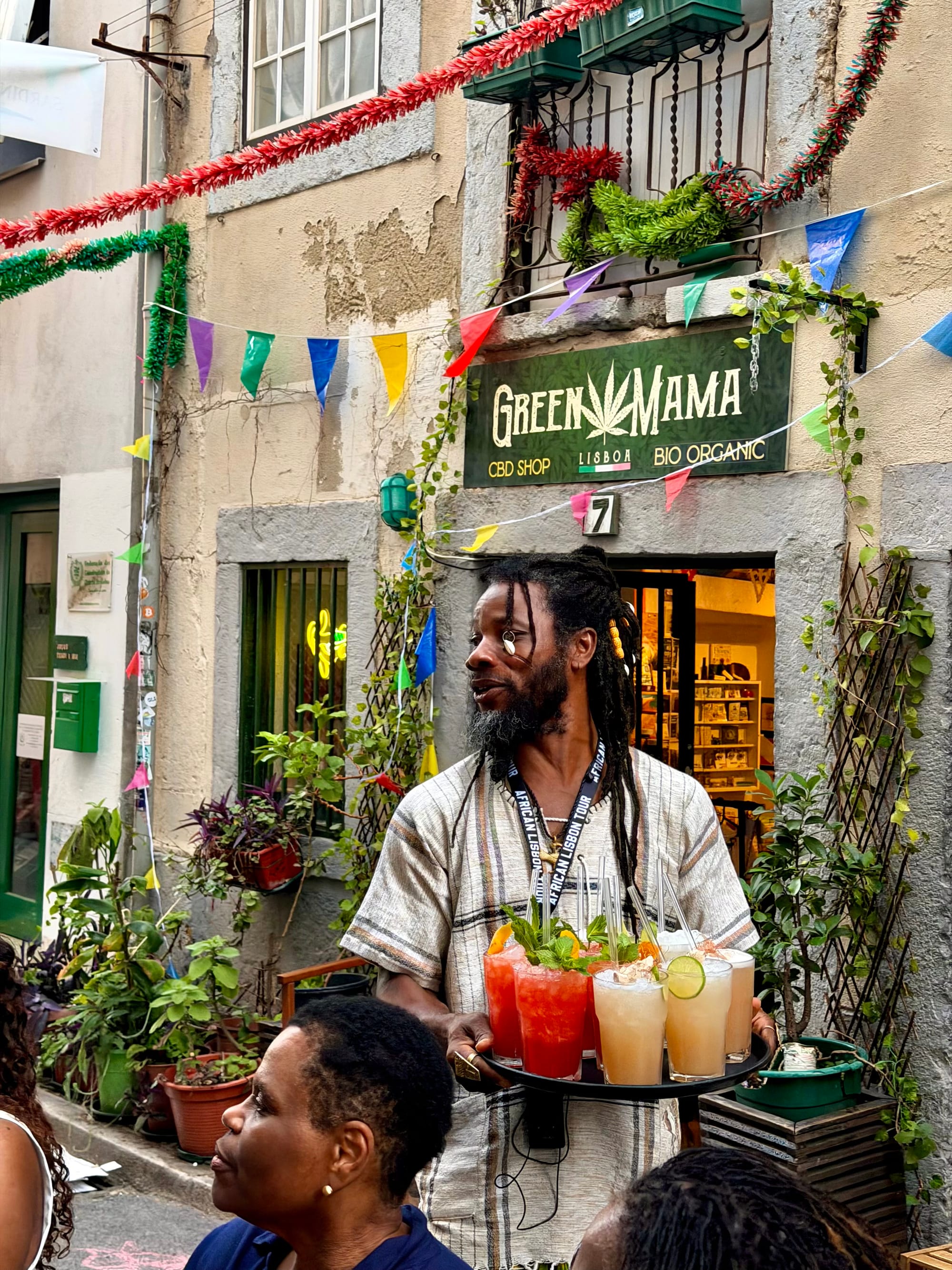
A few photos of Naky Gaglo.
Naky’s African Lisbon Tour is a four-hour journey through different Lisbon neighborhoods, exploring a history that too many guides ignore. Naky regularly weaves in historical primary sources, leaves space for questions, and points out African-owned businesses. As we walked through the city, we also discussed visiting the slave forts in West Africa. Naky knows his history! When we reached Largo de São Domingos, Naky briefly mentioned the square’s Jewish history, then focused on its long history as an African space. Despite there being many Africans and African-owned businesses around the square, I haven’t seen any other guides mention the square’s African history.
Naky’s tour is a must for every visitor to Lisbon. There were about forty participants on the tour. Most were Black, and many were African-American. A few people identified as Latino and Asian. I was one of only two White participants. It was a special experience listening to the other participants talk about the power of being in a large Black group, learning about African legacies in a city most people think of as a White, European city. More White folks need to learn about Lisbon from Naky.
Conclusion
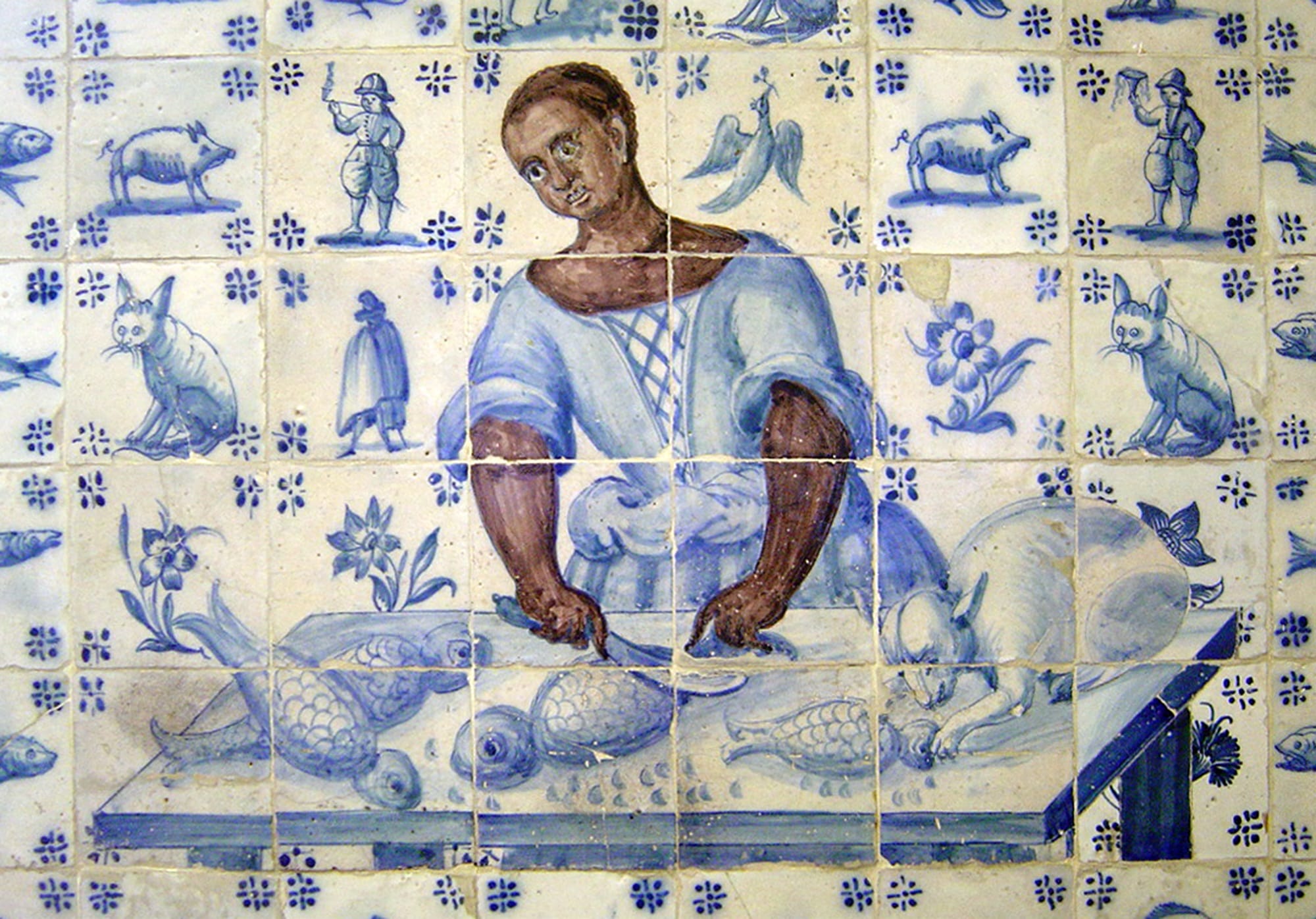
Any visitor to Lisbon and Portugal will most likely notice the extensive use of ceramic tiles. Painted blue-and-white tiles are especially common. These titles reflect Portugal’s Arab and Muslim legacy. Naky discussed how many Portuguese don’t want to talk about Portugal’s “Moorish history.” The tiles were not only aesthetically pleasing, they also were well adapted to the climate. The tiles stay cool in the hot summers.
As I began putting this essay together, I was drawn to this eighteenth-century azulejo (tile) panel from the Museu de Lisboa. The decorative blue-and-white tiles reflect the Muslim history of Portugal. This panel prominently displays an African woman preparing fish. She was most likely domestic enslaved African. We don’t know the woman’s name, but we do know that Africans and Asians have significantly influenced Portuguese history and continue to play a critical role in Portugal today. Instead of celebrating Lisbon’s Enlightenment influences or the legacies of discovery, let’s focus more on learning about the significance of Africans and Asians who have shaped Lisbon and Portugal.
Liberating Narratives is written by Bram Hubbell. If you’ve valued reading this post, please consider becoming a paid subscriber. Your financial contribution supports independent, advertising-free materials for teachers. Thank you, friends.
Feel free to forward this message to a friend or colleague and let them know where they can subscribe. (Hint: it's here.)
If you have any comments or suggestions, please share them with me or post them below. I can also be reached on Bluesky, Threads, Facebook, Instagram, Mastodon, and email.
Liberating Narratives Newsletter
Join the newsletter to receive the latest updates in your inbox.

.png?ref=liberatingnarratives.com)
